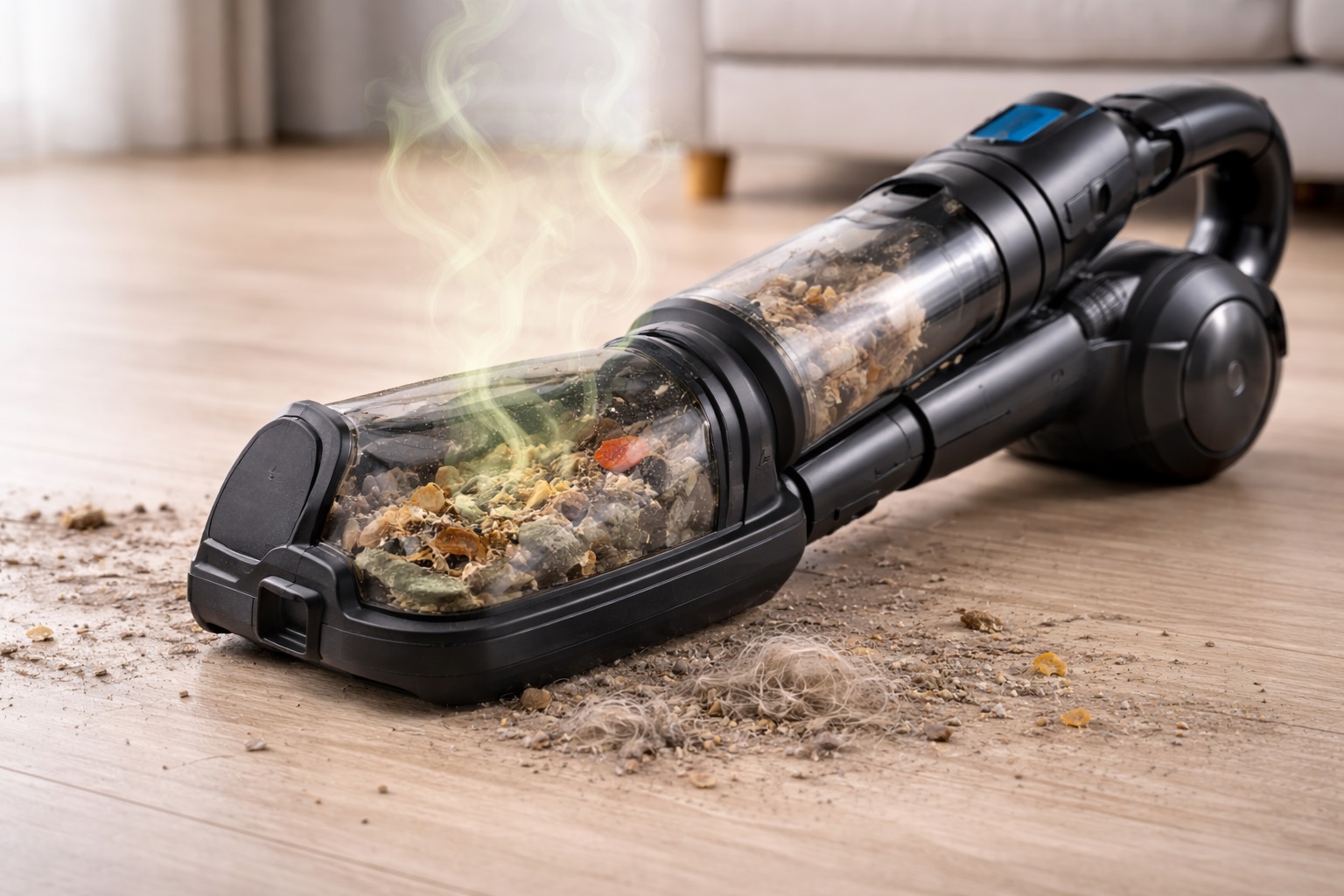
The Hidden Causes Most Users Overlook
Your vacuum worked perfectly at first.
After a few months, you notice something unpleasant:
A musty smell
A dusty odor
A burning-like scent
A “wet dog” smell
Or a sour, moldy odor
Now you’re wondering:
Here’s the reality:
90% of vacuum odor problems are caused by trapped organic debris, moisture retention, or filter contamination — not motor defects.
Whether you own a wet and dry vacuum cleaner, a HEPA Filter Vacuum Cleaner, or an Apartment Vacuum Cleaner, odor issues follow predictable patterns.
Let’s break them down.
🦠 1️⃣ Trapped Organic Debris (The #1 Cause)
Every time you vacuum, you collect:
Dust
Skin cells
Food crumbs
Pet dander
Hair
Carpet fibers
Inside the dust bin, this mixture becomes organic waste.
When left for weeks:
In a Large-Capacity Wet Dry Vacuum Cleaner, users often wait too long before emptying the bin — assuming large capacity means less maintenance.
But more volume = more trapped organic material.
Prevention
✔ Empty bin after each heavy cleaning
✔ Wash dust container monthly
✔ Allow full drying before reassembly
Even dry debris can produce odor over time.
🌊 2️⃣ Moisture Inside Wet and Dry Vacuum Cleaner Systems
If you use a wet and dry vacuum cleaner, moisture is the most common odor trigger.
After vacuuming liquids:
Moisture + organic debris = mold growth.
Even invisible mold can produce strong musty smells.
Warning Signs
Sour odor after wet pickup
Smell worsens when vacuum runs
Slight condensation inside tank
Fix
✔ Empty liquid immediately after use
✔ Rinse tank thoroughly
✔ Dry components completely (24 hours recommended)
✔ Store with lid slightly open for airflow
Wet systems require stricter drying discipline.
🌪️ 3️⃣ HEPA Filter Contamination
A HEPA Filter Vacuum Cleaner traps microscopic particles — including:
Pet dander
Fine dust
Pollen
Bacteria
Over time:
Filter becomes saturated
Airflow decreases
Odor accumulates
If washable HEPA filters are not fully dried before reinstallation:
Pet households are especially prone to this.
Prevention
✔ Wash filters every 2–4 weeks (pet homes more often)
✔ Replace non-washable filters every 3–6 months
✔ Ensure full drying before reinstalling
A clogged HEPA filter not only smells — it also reduces airflow.
🔥 4️⃣ Burning Smell: Motor vs Debris Confusion
A burning smell is different from a musty smell.
Possible causes:
Hair wrapped around brush roll
Belt friction overheating
Dust accumulation near motor housing
True motor electrical issue (rare)
In most cases:
Hair buildup increases friction, producing a hot rubber smell.
Fix
✔ Remove brush roll
✔ Cut wrapped hair
✔ Inspect belt condition
✔ Clean motor intake vents
If smell persists with smoke or sparking, stop using immediately.
🧳 5️⃣ Portable Self-Cleaning Vacuum Cleaner – Does It Prevent Odor?
A Portable Self-Cleaning Vacuum Cleaner often includes:
These features reduce hair wrapping — which helps reduce odor buildup.
However:
Self-cleaning does not eliminate moisture or filter contamination.
Even advanced systems require:
✔ Manual bin emptying
✔ Regular filter maintenance
✔ Proper drying after wet usage
Technology reduces odor risk — but maintenance still matters.
🏢 6️⃣ Why Apartment Vacuum Cleaner Models Smell Faster
An Apartment Vacuum Cleaner is usually:
In smaller living spaces:
Dust concentration may be higher
Pet hair accumulates faster
Air circulation is limited
Smaller bins fill faster, leading to faster odor development.
Regular emptying is essential.
📊 Odor Source Comparison Table
| Smell Type | Most Likely Cause | Risk Level | Solution |
|---|
| Musty | Moisture + debris | Medium | Dry thoroughly |
| Dusty | Full bin/filter | Low | Clean filter |
| Sour | Mold in wet tank | Medium–High | Deep clean & dry |
| Burning rubber | Hair on brush | Medium | Remove buildup |
| Electrical burning | Motor issue | High | Stop using |
Understanding the smell type helps identify the real cause quickly.
🧼 Deep Cleaning Checklist (Every 1–2 Months)
✔ Empty and wash dust bin
✔ Clean or replace HEPA filter
✔ Inspect hose interior
✔ Clean brush roll
✔ Check belt condition
✔ Wipe internal seals
✔ Dry all parts completely
A Multi-Functional Durable Vacuum Cleaner lasts years when maintained properly.
Neglecting maintenance allows odor to build gradually.
⚠️ Is a Smelly Vacuum Dangerous?
Usually no — but:
Mold spores can trigger allergies
Bacteria buildup may worsen indoor air quality
Overheating from clogged airflow can shorten motor lifespan
If odor is accompanied by:
Smoke
Strong burning smell
Electrical failure
Stop using immediately.
🏁 Final Expert Conclusion
Your vacuum smells bad after a few months because:
Organic debris decomposes
Moisture is trapped
HEPA filters become saturated
Hair wraps around brush roll
Large-capacity systems are emptied too late
Whether you use a:
wet and dry vacuum cleaner
Multi-Functional Durable Vacuum Cleaner
Portable Self-Cleaning Vacuum Cleaner
Large-Capacity Wet Dry Vacuum Cleaner
HEPA Filter Vacuum Cleaner
Apartment Vacuum Cleaner
Odor problems are usually maintenance-related — not manufacturing defects.
Clean airflow prevents both smell and performance loss.
A vacuum doesn’t just clean your home.
It needs cleaning too.
📌 Suitable Readers
Homeowners, apartment residents, and pet owners experiencing unpleasant odors from their vacuum cleaners and seeking safe, effective maintenance solutions.
📌 Hashtags
wet and dry vacuum cleaner, Multi-Functional Durable Vacuum Cleaner, Portable Self-Cleaning Vacuum Cleaner, Large-Capacity Wet Dry Vacuum Cleaner, HEPA Filter Vacuum Cleaner, Apartment Vacuum Cleaner, vacuum smells bad, vacuum odor problem, musty vacuum smell, vacuum mold issue, vacuum filter cleaning, vacuum maintenance guide, pet hair vacuum odor, vacuum brush roll cleaning, home cleaning appliances, vacuum airflow system, washable HEPA filter care, indoor air quality vacuum, durable cleaning equipment, residential vacuum maintenance, Lanxstar











