


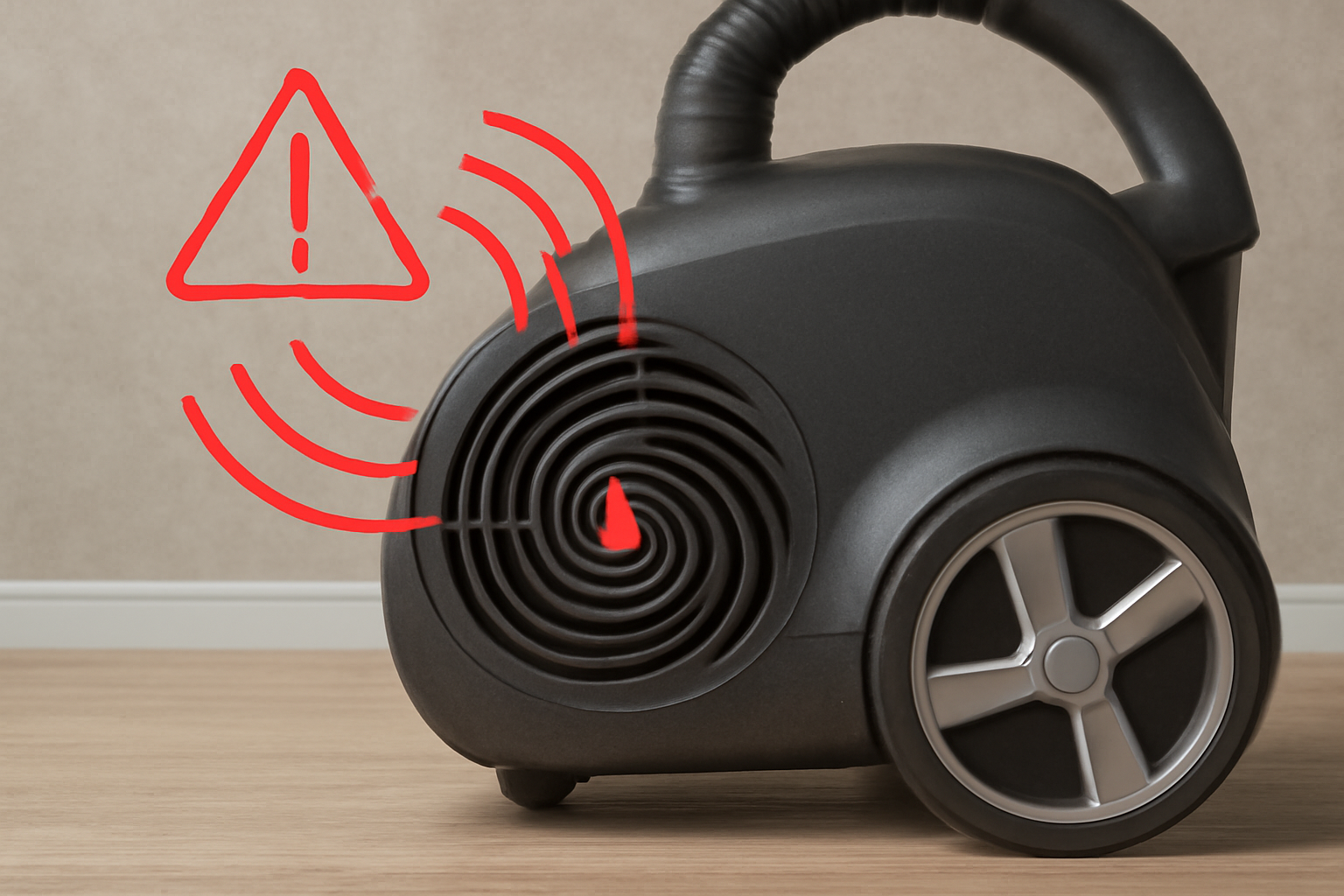
Most vacuum cleaner complaints fall into predictable categories:
“Suction dropped.”
“Battery life got worse.”
“Brush stopped spinning.”
But there is one complaint that grows quietly—pun intended—until it becomes a brand-killing public disaster:
“My vacuum is getting louder.”
“Something sounds wrong.”
“It didn’t sound like this when I bought it.”
Noise drift — the gradual increase of sound level, vibration, tone harshness, or motor instability — is one of the most misunderstood failure patterns in the vacuum industry.
And here’s the uncomfortable truth:
Noise drift is rarely caused by motors.
The real causes are hidden in 6–10 micro-interactions inside the airflow, sealing, filtration, and structural system.
This article reveals why noise drift hits Upright Vacuum Cleaners, Household Vacuum Cleaners, Energy-Saving Efficient Powerful Vacuum Cleaner units, Wet Dry Vacuum Cleaners, and Vacuum for Allergies models especially hard — and why engineers, distributors, and procurement teams must treat noise drift not as an “acoustic issue” but as a predictive reliability signal.
Noise drift is not a noise problem.
It is an early warning that your product is deteriorating somewhere important.
Let’s decode it.
⭐ 1. “Why Is My Vacuum Louder Now?” — The Real Mechanism Behind Noise Drift
Every vacuum has 4 noise sources:
Motor harmonics
Airflow turbulence
Mechanical vibration
Leak-induced whistling or resonance
Users think noise comes from the motor.
But in 2025, field data shows:
Over 70% of noise drift originates from airflow path degradation, not motor quality.
Why?
Because vacuums accumulate:
dust
hair
moisture
micro-leaks
filter clogging
thermal warping
seal compression loss
These change airflow geometry.
And airflow geometry is the acoustic signature of the machine.
⭐ 2. Why Upright Vacuum Cleaners Suffer the Biggest Noise Drift
Upright designs:
push more air volume
have higher suction profiles
transfer more floor vibration into the chassis
This causes three drift accelerators:
🔸 Drift Driver 1 — Brushroll Load
As carpets load the brush and dust accumulates in bearings:
motor torque increases
fan load increases
harmonics shift upward
Noise becomes sharper and higher-frequency.
🔸 Drift Driver 2 — Long Air Path
Uprights have long, curved airflow channels.
Dust buildup changes turbulence behavior.
Think of it like a flute:
small changes → big acoustic impact.
🔸 Drift Driver 3 — Structural Flex
Tall chassis → more resonance.
As plastics age, resonance peaks move upward.
Result:
Loudness increases without any motor degradation.
⭐ 3. Household Vacuum Cleaners (Stick & Canister) Develop “Seal Noise Drift”
In stick vacuums and canisters, noise drift mostly comes from seal compression loss.
Seal compression loss happens when:
seals deform
seals dry out
seals lose elasticity
the dust cup latch weakens
thermal cycling changes seal shape
This creates:
micro-leaks
high-frequency whistles
unsteady airflow tone
The noise is often described as:
“A faint whistling.”
“A rising tone.”
“A ringing sound.”
These are classic signatures of seal drift.
⭐ 4. Why Energy-Saving Efficient Powerful Vacuum Cleaner Models Drift Faster
The more energy-efficient the motor, the more sensitive it becomes to airflow changes.
These motors rely on:
controlled backpressure
optimized RPM profiles
low turbulence ducts
stable intake resistance
When airflow deteriorates, the motor responds dynamically:
RPM fluctuates
noise peaks increase
electronic feedback loops oscillate
This creates cyclical pulsing noise — an extremely common noise drift pattern in energy-saving platforms.
⭐ 5. Wet Dry Vacuum Cleaners Have a Unique “Moisture Noise Drift”
Wet-dry vacuums breathe a harder life:
humidity
dirty water vapor
heavy debris
hair clumps
foam and bubbles
microbial buildup
Moisture inside ducts causes:
resonance changes
partial blockages
soft whistling
“flapping” noises
bubbling resonance after long use
If seals begin absorbing moisture:
the sealing force drops
turbulence increases
noise escalates rapidly
Wet Dry Vacuum Cleaners require double sealing and water-resistant acoustic design, or noise drift happens within weeks.
⭐ 6. Why Vacuum for Allergies Are the Most Fragile to Noise Drift
Vacuum for Allergies units use:
denser filters
HEPA layers
multiple filtration stages
more restrictive airflow paths
As soon as filters accumulate fine dust:
resistance increases
motor pitch rises
airflow tone sharpens
The transition is dramatic:
Clean HEPA → 64 dB
Clogging HEPA → 72 dB
Dirty HEPA → 78–82 dB
This is why allergy vacuums must be engineered with:
pressure compensation
predictable airflow profiles
early clogging detection
airflow-stable duct geometry
Without these, noise drift arrives fast.
⭐ 7. The 12 Hidden Causes of Noise Drift (Most Factories Only Know 3)
🎯 1) Seal Compression Loss
Most common cause.
🎯 2) Dust Accumulation in Air Ducts
Creates new turbulence patterns.
🎯 3) Filter Clogging
Motor speed rises → noise rises.
🎯 4) Micro-Cracks in Plastic
Resonance shifts upward.
🎯 5) Thermal Warping
High heat warps ducts → whistling.
🎯 6) Brushroll Bearing Wear
Causes roughness and rumble.
🎯 7) Fan Blade Micro-Chipping
Microscopic chips → huge acoustic change.
🎯 8) Gasket Misalignment
Creates whistling leaks.
🎯 9) Dust on Motor Rotor
Changes harmonics.
🎯 10) Moisture or Foam Accumulation
Changes resonance.
🎯 11) Softening of Support Structures
Leads to rattling and chassis vibration.
🎯 12) User-Induced Shock
Drops or impacts change acoustic properties.
Noise drift is a multi-system degradation pattern.
⭐ 8. Why Most Factories Misdiagnose Noise Drift (And Why Buyers Must Not Trust Their Answers)
Factories typically blame noise drift on:
“User didn’t clean the filter.”
“Something got stuck in the duct.”
“Normal wear and tear.”
Reality:
Factories cannot diagnose noise drift because:
they test in clean labs
they do not simulate real-user dust
they do not age seals
they do not simulate thermal cycling
they do not test vibration over life-cycle
they do not measure drift curves
they test for 10 minutes, not 10 weeks
A factory’s “sample test report” reveals nothing about noise drift.
⭐ 9. The “Drift Curve” That Predicts Future Failure
Noise drift tends to follow a predictable sequence:
Stage 1: 0–30 Days — Minor tonal shift
Users barely notice.
Stage 2: 30–60 Days — Sharpness increases
Often interpreted as “the vacuum is working harder.”
Stage 3: 60–120 Days — Whistling, rattling, or pulsing
Noise becomes annoying.
Stage 4: 120–240 Days — Performance drop or failure
Noise was the early warning.
Noise drift is a diagnostic signal of deeper issues.
⭐ 10. Noise Drift = Reliability Drift
(This Is What Buyers Miss)
Noise drift correlates with:
airflow deterioration
seals degrading
motors aging abnormally
electronics compensating for resistance
battery stress
structural fatigue
In industry reliability studies:
Noise drift is the #1 early predictor of vacuum failure after 6–12 months.
Meaning:
If you hear noise drift,
you’re already watching a slow-motion failure.
⭐ 11. How Professionals Diagnose Noise Drift Correctly
The new standard for vacuums procurement teams includes:
✔ Acoustic Fingerprinting
Baseline + monthly testing.
✔ Frequency Analysis
Noise drift creates signature spikes at:
2–4 kHz → leak
6–10 kHz → seal deformation
60–120 Hz → vibration
broadband → filter clogging
✔ Airflow Path Endoscopy
Internal dust discovery.
✔ Gasket Compression Test
Seal fatigue measurement.
✔ Brushroll Torque Monitoring
✔ Thermal Imaging After 10 Minutes Use
✔ Multi-Surface Vibration Mapping
This is what top buyers now require.
⭐ 12. How to Engineer a “Noise Drift Resistant” Vacuum
🔹 1) Over-Sized Seals
So compression remains stable after aging.
🔹 2) Thickened Air Duct Walls
Reduces resonance drift.
🔹 3) Reinforced Latch Interfaces
Prevents dust cup misalignment.
🔹 4) Dust-Shedding Geometry
Prevents turbulence buildup.
🔹 5) Ambient Heat Control
Prevents thermal warping.
🔹 6) Aerodynamic Stability Testing
Especially important for Wet Dry Vacuum Cleaners.
🔹 7) HEPA Backpressure Compensation
Critical for Vacuum for Allergies.
Noise drift must be engineered out,
not “explained away.”
⭐ 13. Why Distributors Must Treat Noise Drift as a Contractual Specification
You should add specifications like:
“Noise drift shall not exceed +2 dB after 100 hours of multi-surface use.”
“Air leakage shall remain within tolerance after seal aging tests.”
“Duct geometry must retain its shape after thermal cycling.”
“Gasket compression shall remain >60% after 500 cycles.”
Factories change behavior when specs are measurable.
⭐ 14. Final Lesson:
Noise Drift Is the Vacuum Industry’s Most Ignored Warning Signal
Noise drift is not:
user error
normal aging
harmless acoustic change
Noise drift means:
airflow degradation
structural fatigue
sealing failure
filter overload
motor compensation stress
Noise drift predicts:
future breakdown
performance loss
return surges
negative reviews
retailer delisting
For Upright Vacuum Cleaners, Household Vacuum Cleaners, Energy-Saving Efficient Powerful Vacuum Cleaner units, Wet Dry Vacuum Cleaners, and Vacuum for Allergies:
Noise drift is your reliability barometer.
Ignore it — and you will pay for it.
Hashtags(50 tags including lanxstar)
lanxstar, #vacuumnoise, #noisedrift, #uprightvacuum, #householdvacuum, #filterclogging, #sealcompression, #airflowdesign, #ductacoustics, #wetdryvacuum, #hepaengineering, #vacuumforengineers, #productreliability, #noisefailureanalysis, #motoracoustics, #qualitycontrol, #buyersguide2025, #retailquality, #vacuumprocurement, #acoustictesting, #forensicdiagnostics, #engineeringdetails, #lifecycletesting, #airpathstability, #structuralresonance, #thermalwarping, #productlifecycle, #multisurfacecleaning, #brandprotection, #failurepatterns, #globaldistribution, #noiseanalysis, #componentaging, #filterengineering, #vacuumindustry, #plasticdeformation, #vibrationanalysis, #dustpathdesign, #vacuumtesting, #engineerinsights