


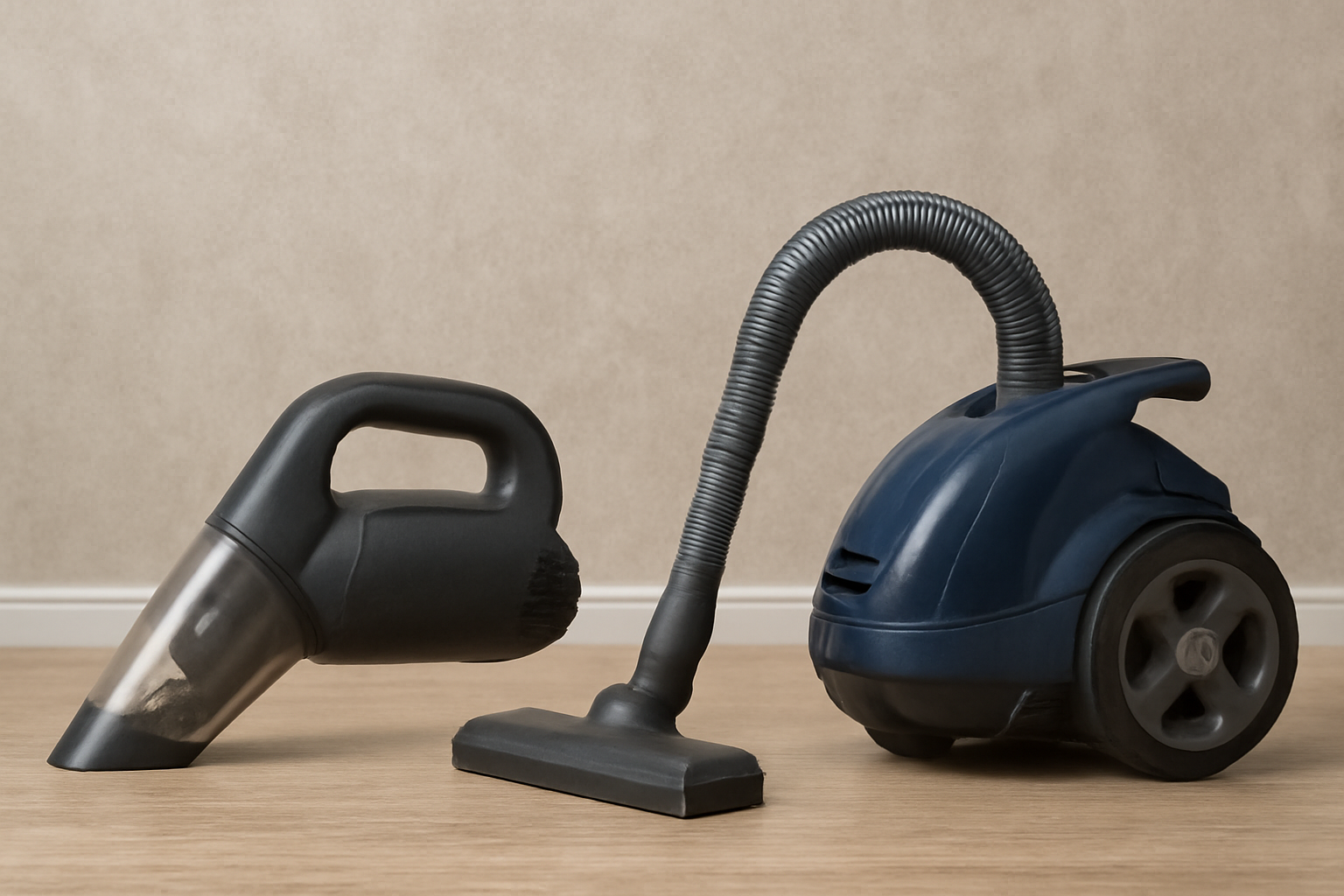
Everyone in the vacuum industry talks about flagship products:
high-end Upright Vacuum Cleaners
full-size Household Vacuum Cleaners
premium cordless flagships
But in 2025, loyalty is often decided somewhere else:
Not in the living room,
but in the car, the office, the small apartment, or a hotel room.
In other words — by the second vacuum:
the compact Car Vacuum Cleaner
the quick-clean Cordless Vacuum Cleaner
the niche Portable Vacuum for Travel
This “secondary” category is treated as low-priority by many brands.
Yet for global consumers, it is often the first product they try from a new brand, or the most frequently used in daily life.
This article explains why second vacuums matter far more than their price tags suggest, why distributors who get them wrong lose repeat orders, and how to design a portfolio where Upright Vacuum Cleaners, Household Vacuum Cleaners, and compact units work together as a brand ecosystem instead of random SKUs.
🧭 1. Why the “Second Vacuum” Is Often the First Contact With Your Brand
For many users, the purchase journey looks like this:
See a promotion for a Car Vacuum Cleaner or desk vacuum.
Try a Cordless Vacuum Cleaner as a “cheap experiment.”
If the product feels solid → consider the same brand for a large home vacuum.
If the product feels cheap → mentally blacklist the brand.
In budget-sensitive markets (parts of Eastern Europe, GCC, North Africa), consumers are more likely to:
start with a lower-priced compact unit
use it heavily
judge the brand based on this “small device”
That means:
Your “second vacuum” is often your first brand ambassador.
If this entry-level unit feels weak, flimsy, underpowered or noisy, it directly reduces the chance that the same user will later choose your Upright Vacuum Cleaners or Household Vacuum Cleaners.
🚗 2. Car, Desk, and Travel Vacuums Live in the Harshest Real Environments
We like to imagine travel and mini vacuums are used:
gently
occasionally
for light crumbs
Reality:
Cars in the Middle East easily reach 50–60°C inside.
Office cleaners use mini vacuums dozens of times per day.
Travel users toss them into luggage, backpacks, or trunks.
A Portable Vacuum for Travel is:
dropped
bounced
charged irregularly
exposed to sand, hair, food, makeup, pet mess
And yet, these units are often built with more compromises than mainline models:
weaker plastics
simplified seals
cheaper motors
minimal filtration
So they fail more, exactly where users touch your brand most often.
💥 3. The “Expectation Gap” Problem: Users Expect More Than You Think
From a B2B perspective, travel vacuums are:
low ASP
promotion items
add-on SKUs
From a user perspective, they are:
“small but should still work”
“ideal for quick car / sofa / keyboard cleaning”
“a backup when I don’t want to drag out the big vacuum”
Users don’t think:
“It’s cheap, so I accept bad performance.”
They think:
“If this can’t even handle small messes,
why would I trust this brand for anything bigger?”
That’s how a High Suction Vacuum Cleaner flagship gets rejected by a customer who only ever tried your $35 car vacuum.
🧩 4. Second Vacuums Are Meant to Complement, Not Compete
In a properly designed ecosystem:
Upright Vacuum Cleaners
→ handle deep cleaning, carpets, and whole-home sessions.Household Vacuum Cleaners (sticks / canisters)
→ handle regular weekly cleaning and multi-room coverage.Cordless Vacuum Cleaner units
→ handle flexible, fast jobs and small apartments.Car Vacuum Cleaner & Portable Vacuum for Travel
→ handle ultra-local messes, personal spaces, cars, offices, kids’ zones.
But many brands accidentally make second vacuums fight with primary units:
too bulky → user doesn’t see the benefit
too weak → user doesn’t see them as useful
too noisy → user avoids using them at night or in a car
The result?
The “second vacuum” becomes a drawer ornament, not a daily tool.
A well-designed second vacuum should be:
clearly lighter
clearly easier to reach for
clearly targeted at specific jobs
so that users instinctively know when to use which.
⚙️ 5. What Makes a Good Secondary Vacuum (Technically)?
Across high-performing travel and mini units, five engineering traits show up repeatedly:
1️⃣ Purpose-Built Form Factor
Instead of shrinking a full-size design:
car-focused → narrow nozzles, LED, flexible hose
travel-focused → foldable / slim design, easy to pack
desk/office → quiet, small footprint on a shelf
2️⃣ Honest, Stable Suction
It doesn’t have to compete with a full High Suction Vacuum Cleaner,
but it must:
pick up crumbs, hair, sand reliably
maintain suction across 70–80% of battery capacity
avoid dramatic “good for 10 seconds, then useless” behavior
3️⃣ Strong Structural Durability
Secondary units are dropped more often.
Reinforce:
nozzle connections
dust cup latches
charging port area
4️⃣ Simple but Real Filtration
Even for a mini device, users notice when:
fine dust blows back at their face
the device smells bad
they need to clean the filter too often
5️⃣ Quiet Enough for Confined Spaces
Car cabins and hotel rooms amplify sound.
A screaming unit inside a vehicle is an instant “never again.”
🧪 6. Why Many Mini Vacuums Fail in Real Use After 30–90 Days
Most compact vacuums are tested:
for short run time
in clean lab conditions
with minimal drop / heat / vibration
But real environments add:
car heat
trunk vibration
frequent rough handling
long storage with partial charge
Typical failure patterns:
battery degradation → very short runtime
dust leaking from low-cost seals
cracked dust cups from repeated impact
USB charging ports loosening
noisy fan imbalance from dust ingress
And because these products are low-priced,
many brands accept this.
Retailers and end users do not.
🧠 7. The Brand Psychology of “If They Can’t Even Get This Right…”
Here’s what happens psychologically:
User buys a mini or travel vacuum “just to try.”
It feels cheap, breaks early, or performs poorly.
User generalizes:
“This brand cuts corners.”
Later, when shopping for Upright Vacuum Cleaners or top-tier Household Vacuum Cleaners, the same brand logo triggers distrust.
This is where some brands lose entire upgrade cycles.
They think:
“We’ll win them later with a hero product.”
But the cheap second vacuum already closed that door.
🧳 8. Portable Vacuum for Travel: Different Regions, Different Priorities
In Europe, second vacuums are often:
used in small apartments
shared between roommates
brought to offices
In the Gulf & Middle East:
used in hot cars
used on sand, dates, and fine dust
used for children’s spaces
This affects design priorities:
EU: noise, design aesthetics, storage footprint.
Middle East: heat tolerance, sand resistance, strong spot suction.
A one-size-fits-all compact design is rarely optimal.
Distributors who localize second vacuum specs to their region earn more repeat business later.
🔋 9. How to Match Battery & Runtime Expectations for Secondary Devices
Users don’t expect 60–90 minutes from a pocket-size unit.
But they do expect:
consistent suction across the claimed runtime
at least one full car or room spot-clean per charge
reasonable standby behavior (not dead after a week in a drawer)
For a secondary unit that supports the main ecosystem:
10–15 minutes of honest, stable power is acceptable
fake “25–30 minutes” that only offers real suction for 3 minutes is damaging
A small, well-managed pack can feel more premium than a larger but poorly utilized battery.
🧱 10. Integrating Secondary Units Into a “Vacuum Ecosystem Strategy”
Smart brands no longer design single products.
They design ecosystems:
A core of Upright Vacuum Cleaners for deep cleaning.
A family of Household Vacuum Cleaners for everyday use.
Companion Cordless Vacuum Cleaner units for modern apartments.
Region-tailored Car Vacuum Cleaner and Portable Vacuum for Travel solutions.
This unlocks:
cross-selling (“buy the kit”)
upselling (“start small, later upgrade”)
channel bundles (car vacuum + main vacuum)
multi-room deployment (home + car + office)
From a B2B angle, this also means:
better container mix
higher average order value
more reasons for retailers to keep your brand visible
📊 11. Metrics Distributors Should Track for Second Vacuums
To manage second vacuums as strategic tools, not throwaways, track:
Attach rate:
How many second vacuums are sold with a main unit?Upgrade correlation:
How many users who bought a mini later bought a larger machine?Repeat complaint patterns:
Filter, latch, battery, or suction complaints?Channel sensitivity:
Do car vacuums perform better in automotive channels or online bundles?Region-specific returns:
Are heat and dust in GCC countries driving more failures than in EU?
These metrics help refine product specs and supplier choices.
🧷 12. Minimum Technical Baseline for a Trustworthy Second Vacuum
If a travel or mini unit carries your brand, it should meet at least:
robust plastics with drop-tested design
sealed channels that do not leak visible dust
filters that are washable or easily replaceable
stable suction with reasonable airflow for small messes
noise levels appropriate for confined spaces
USB or dock charging that can handle long-term plug-in
storage design that doesn’t encourage damage (no protruding fragile parts)
And above all:
It should feel like a scaled-down real vacuum,
not a noisy toy.
When users say:
“Small but surprisingly solid.”
you win.
When they say:
“Cheap and useless.”
you lose far more than the margin on that one product.
🏁 Conclusion: Second Vacuums Are Small Products With Giant Strategic Impact
The industry has spent years obsessing over flagships:
the most powerful Upright Vacuum Cleaners
the most advanced Household Vacuum Cleaners
the most eye-catching cordless designs
But quietly, in cars, offices, bedrooms, hotel rooms, and travel bags, users are building their real opinion of your brand through:
one small Cordless Vacuum Cleaner
one cheap Car Vacuum Cleaner
one Portable Vacuum for Travel they picked up on sale
If that second vacuum feels like a mistake,
your chances of selling them anything bigger drop dramatically.
If it feels intelligent, solid, and honestly capable,
you’ve just earned future upgrade revenue at very low marketing cost.
Second vacuums are no longer accessories.
They are strategic brand entry points.
Treat them accordingly.
Hashtags
lanxstar, #secondaryvacuum, #carvacuum, #cordlessvacuum, #travelvacuum, #uprightvacuum, #householdvacuum, #brandloyalty, #productecosystem, #vacuumportfolio, #marketstrategy, #globaldistribution, #oemvacuum, #odmvacuum, #buyersguide, #retailbundles, #entrylevelproducts, #userexperience, #productpositioning, #vacuumengineering, #durabledesign, #componentquality, #heatresistance, #smallappliances, #procurementinsights, #vacuumindustry2025, #portablecleaning, #compactdesign, #automotivechannel, #multiroomcleaning, #ecosystemthinking, #repeatpurchase, #attachrate, #brandperception, #productlifecycle, #qualitystandards, #travelgadgets, #homeandcarcleaning, #everydaycleaning