Hi, message us with any questions.
We're happy to help!





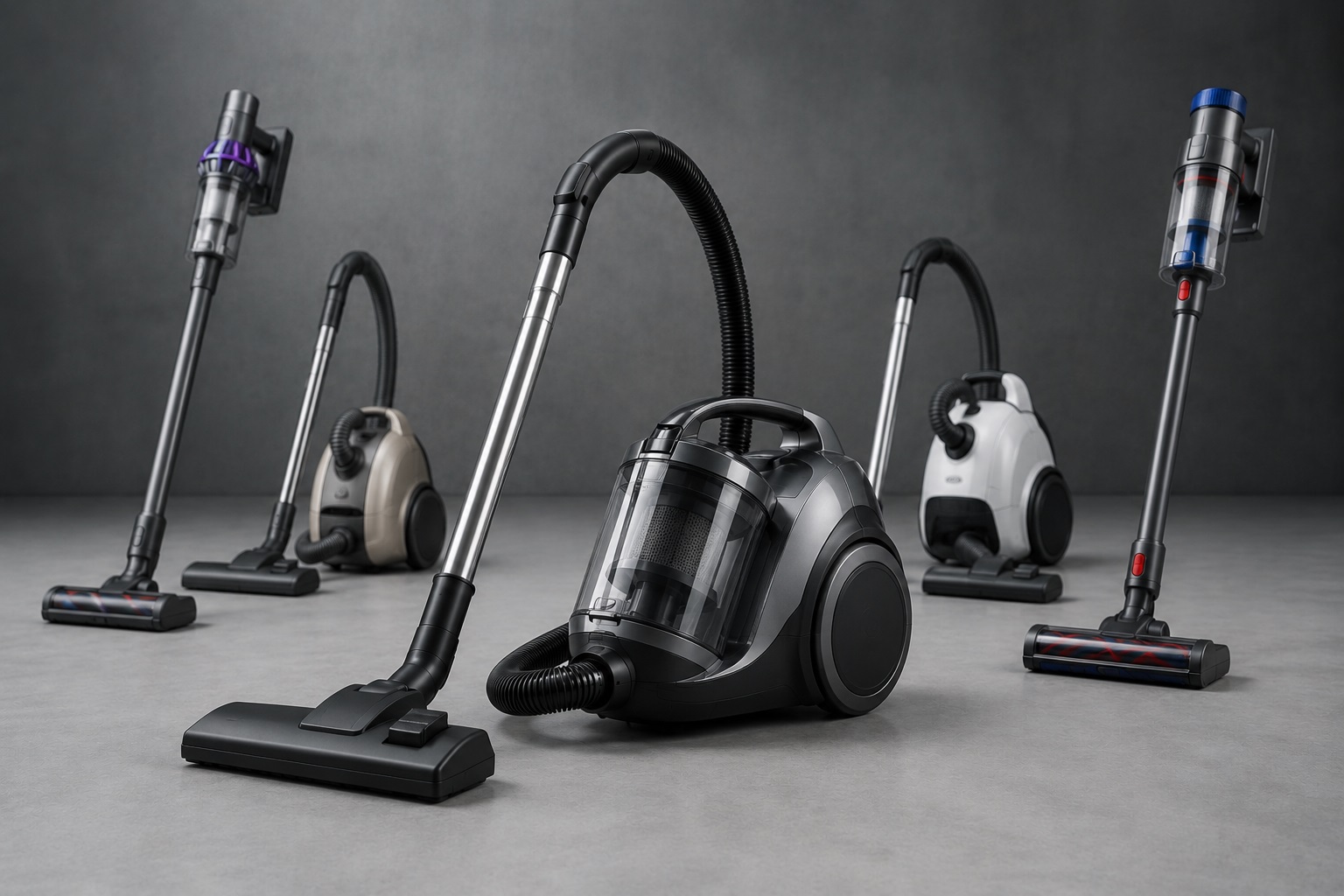
Why Most Vacuum Cleaner Factories Still Analyze Competition Like It’s 2015
For years, many vacuum cleaner factories believed competitor analysis meant one thing:
comparing prices and product specifications.
But global competition has changed dramatically.
Today, manufacturers are no longer competing only on:
suction power,
motor wattage,
battery size,
or factory pricing.
Instead, the modern vacuum cleaner industry increasingly revolves around:
distributor ecosystems,
operational reliability,
ESG positioning,
smart servicing infrastructure,
lifecycle profitability,
and long-term market trust.
This is why many factories with:
advanced production lines,
strong engineering teams,
and competitive export pricing
still struggle internationally.
Because modern vacuum competitor analysis is no longer about:
“Who makes the product?”
It is about:
“Who controls the ecosystem?”
That is the biggest competitive shift happening inside the global vacuum cleaner industry right now.
📊 The Global Vacuum Industry Is Entering an Ecosystem Competition Era
According to multiple appliance industry reports, the global vacuum cleaner market is projected to continue strong growth through the next decade due to:
smart home adoption,
cordless cleaning technology,
sustainability demand,
commercial cleaning expansion,
and rising hygiene awareness.
At the same time, market competition is becoming significantly more aggressive.
Today’s manufacturers compete not only with:
traditional OEM factories,
local appliance brands,
or regional exporters,
but increasingly with:
smart appliance ecosystems,
DTC (direct-to-consumer) brands,
AI-powered cleaning companies,
and sustainability-driven premium brands.
This creates a major industry transformation:
manufacturing capability alone no longer guarantees competitiveness.
One sourcing executive reportedly stated:
“Many factories still compete using manufacturing logic, while the market already competes using ecosystem logic.”
That statement perfectly explains the current state of global vacuum competition.
🚨 The Biggest Mistake in Vacuum Competitor Analysis
The single biggest mistake manufacturers still make is:
benchmarking only product specifications.
Many OEM factories continue comparing:
suction power,
battery capacity,
HEPA filtration,
and factory quotations.
But experienced distributors increasingly evaluate suppliers using completely different standards.
Today’s buyers increasingly prioritize:
servicing stability,
warranty reliability,
ESG credibility,
spare parts continuity,
operational efficiency,
and channel protection.
This means many factories are analyzing:
the wrong competitive battlefield.
🧠 What Smart Vacuum Manufacturers Actually Analyze
The strongest manufacturers no longer ask:
“Whose product is cheaper?”
Instead, they ask:
“Why do distributors trust certain competitors more?”
This is a completely different level of strategic analysis.
🔍 The 5-Layer Competitive Analysis Framework
| Competitive Layer | What Smart Manufacturers Analyze |
|---|---|
| Product Layer | Innovation & differentiation |
| Pricing Layer | Margin sustainability |
| Distribution Layer | Dealer ecosystem stability |
| Branding Layer | Market positioning & trust |
| Operational Layer | Reliability & servicing capability |
Most factories remain trapped in:
product competition,
and pricing competition.
Future industry leaders increasingly compete through:
operational ecosystems.
⚡ Layer 1: Product Competition Is Losing Its Power
For years, vacuum cleaner competition focused heavily on:
suction performance,
battery runtime,
and hardware specifications.
But product gaps are shrinking globally.
Today, many factories can produce technically similar products.
This creates a major problem:
hardware is becoming easier to copy.
For example:
Many cordless vacuum systems now offer similar:
brushless motor performance,
lithium battery technology,
and HEPA filtration systems.
Yet premium brands still dominate pricing power.
Why?
Because companies like Dyson compete through:
industrial design,
ecosystem experience,
premium positioning,
and emotional branding.
Products can be copied.
Ecosystems are much harder to replace.
This is one of the most important lessons OEM factories must understand moving forward.
🌍 Layer 2: Price Wars Are Quietly Destroying the Industry
Many factories still attempt growth through:
aggressive quotations,
low-margin exports,
and discount competition.
But after years of competing in international OEM markets, many manufacturers eventually realize that price wars weaken distributor trust faster than they generate sustainable growth.
One European distributor reportedly stopped cooperating with several low-cost suppliers after repeated online undercutting damaged local retailer confidence.
This highlights a major hidden issue:
unstable pricing destroys channel ecosystems.
Modern distributors increasingly prioritize:
pricing integrity,
stable margins,
MAP policy consistency,
and long-term operational reliability.
This is fundamentally reshaping:
market competition vacuum dynamics.
🏭 Layer 3: Distributor Ecosystems Are Becoming Competitive Weapons
One of the biggest shifts in the vacuum cleaner industry is the rise of:
ecosystem competition.
Today, leading manufacturers increasingly compete through:
dealer networks,
servicing infrastructure,
spare parts systems,
training programs,
and after-sales stability.
Kärcher expanded global influence not only through product quality —
but through strong commercial cleaning ecosystems including:
professional servicing support,
distributor partnerships,
and long-term maintenance infrastructure.
This is especially important in:
Europe,
North America,
and commercial cleaning sectors.
Factories focusing only on manufacturing often underestimate:
how powerful servicing ecosystems have become.
📦 Layer 4: Branding Is Becoming a Competitive Technology
Many OEM factories still believe:
“Good products naturally create strong brands.”
This is increasingly false.
Modern vacuum industry competition increasingly depends on:
positioning,
storytelling,
sustainability identity,
and emotional trust.
For example:
SharkNinja rapidly expanded in North America by combining:
aggressive retail positioning,
influencer marketing,
eCommerce optimization,
and customer-focused branding.
Meanwhile, Dyson transformed vacuum cleaners from:
household appliances
into:
premium technology lifestyle products.
This demonstrates a major industry reality:
branding itself has become a competitive technology.
🔧 Layer 5: Operational Reliability Is Becoming the Ultimate Competitive Advantage
This may become the single most important trend in the future vacuum industry.
Today, distributors increasingly care less about:
who offers the cheapest quotation,
and more about:
who creates the fewest operational emergencies.
This includes:
shipment consistency,
quality stability,
battery reliability,
warranty cooperation,
and spare parts continuity.
One distributor reportedly stated:
“The best supplier is not the cheapest supplier. It is the supplier that creates the fewest problems over five years.”
This statement reflects the future of:
OEM vacuum supplier competition.
Operational reliability itself is becoming:
premium market positioning.
📈 The Vacuum Competition Positioning Matrix
| Competitive Strategy | Main Advantage | Biggest Weakness |
|---|---|---|
| Low-Cost Competition | Fast market entry | Weak loyalty |
| Hardware Competition | Product differentiation | Easy replication |
| Branding Competition | Premium margins | High marketing cost |
| Ecosystem Competition | Distributor stability | Long-term investment |
| Operational Intelligence | Sustainable leadership | High execution complexity |
Most factories remain trapped in:
low-cost competition,
or hardware competition.
Future leaders increasingly focus on:
ecosystem control + operational intelligence.
🌱 Sustainability Is Becoming a Competitive Weapon
One of the biggest global vacuum industry trends is sustainability-driven competition.
European and North American buyers increasingly evaluate:
recyclable materials,
repairability,
energy efficiency,
carbon footprint,
and ESG positioning.
This means sustainability is no longer simply:
environmental positioning.
It is increasingly:
competitive positioning.
Manufacturers ignoring sustainability trends may gradually lose:
premium distributors,
commercial contracts,
and long-term ecosystem opportunities.
🤖 The Future of Competition: Smart Ecosystems & AI Servicing
Over the next decade, the vacuum cleaner industry may shift toward:
AI-powered servicing,
predictive maintenance ecosystems,
subscription cleaning models,
smart building integrations,
and connected cleaning infrastructure.
Future competition may no longer focus only on:
vacuum products,
but increasingly on:
cleaning intelligence ecosystems.
This is where future industry leaders may emerge.
⚠️ The 7 Biggest Competitive Mistakes Vacuum Factories Still Make
❌ Competing Only on Price
Creates weak long-term positioning.
❌ Ignoring Distributor Profitability
Distributors prioritize survivability.
❌ Weak Branding Strategy
Good products alone no longer guarantee growth.
❌ No Ecosystem Thinking
Modern competition is ecosystem competition.
❌ Weak Spare Parts Systems
Operational instability damages trust.
❌ Ignoring Sustainability Trends
ESG pressure is growing globally.
❌ Copying Competitors Instead of Differentiating
Future leaders build unique ecosystems.
🔮 Future Trends in Vacuum Industry Competition
Over the next decade, successful manufacturers will increasingly compete through:
ecosystem stability,
sustainability positioning,
AI-powered servicing,
operational intelligence,
lifecycle support,
and distributor trust systems.
The future belongs to manufacturers that understand:
products can be copied.
ecosystems are much harder to replace.
✅ Final Thoughts
Modern vacuum competitor analysis requires far more than comparing:
products,
pricing,
or manufacturing scale.
For every vacuum cleaner manufacturer and OEM vacuum supplier, the real challenge is:
“How can we build stronger ecosystems, distributor trust, and operational reliability than competitors?”
Because future market competition will increasingly reward:
stability,
servicing capability,
sustainability,
branding,
and operational intelligence.
The manufacturers that understand this shift early will become the next generation of global vacuum industry leaders.
👥 Suitable Readers
Vacuum cleaner manufacturers
OEM vacuum suppliers
Product development managers
International distributors
Commercial cleaning equipment buyers
Global sourcing teams
Cleaning equipment entrepreneurs
Vacuum cleaner industry investors
Hashtags
vacuumcompetitoranalysis, vacuumcleanermanufacturer, OEMvacuumsupplier, marketcompetitionvacuum, vacuumindustrytrends, globalvacuummarket, vacuumindustrycompetition, commercialvacuumsystems, smartvacuumtechnology, sustainablecleaningequipment, vacuumcleanerbranding, distributorstrategy, OEMcompetition, vacuumfactorystrategy, globaldistributionnetwork, vacuumpricingstrategy, operationalreliability, distributorprofitability, ESGcleaningproducts, cordlessvacuumtechnology, vacuumindustryanalysis, vacuumdealernetwork, marketpositioningstrategy, smartcleaningequipment, industrialvacuumsystems, vacuumcleanerOEM, privateLabelvacuumcleaner, sustainablemanufacturing, cleaningtechnologyinnovation, vacuumexportbusiness, lifecyclevaluepricing, internationalprocurement, channelprotection, aftermarketservice, sparepartssupply, premiumvacuumbrand, vacuumsourcingstrategy, cleaningequipmentOEM, retailpositioning, vacuumecosystem, warrantyriskmanagement, energyefficientvacuum, globalOEMstrategy, vacuumindustryfuture, facilitymanagementsolutions, vacuumindustrygrowth, operationalintelligence, vacuumtechnologytrends, Lanxstar, futureofvacuumindustry



