Hi, message us with any questions.
We're happy to help!





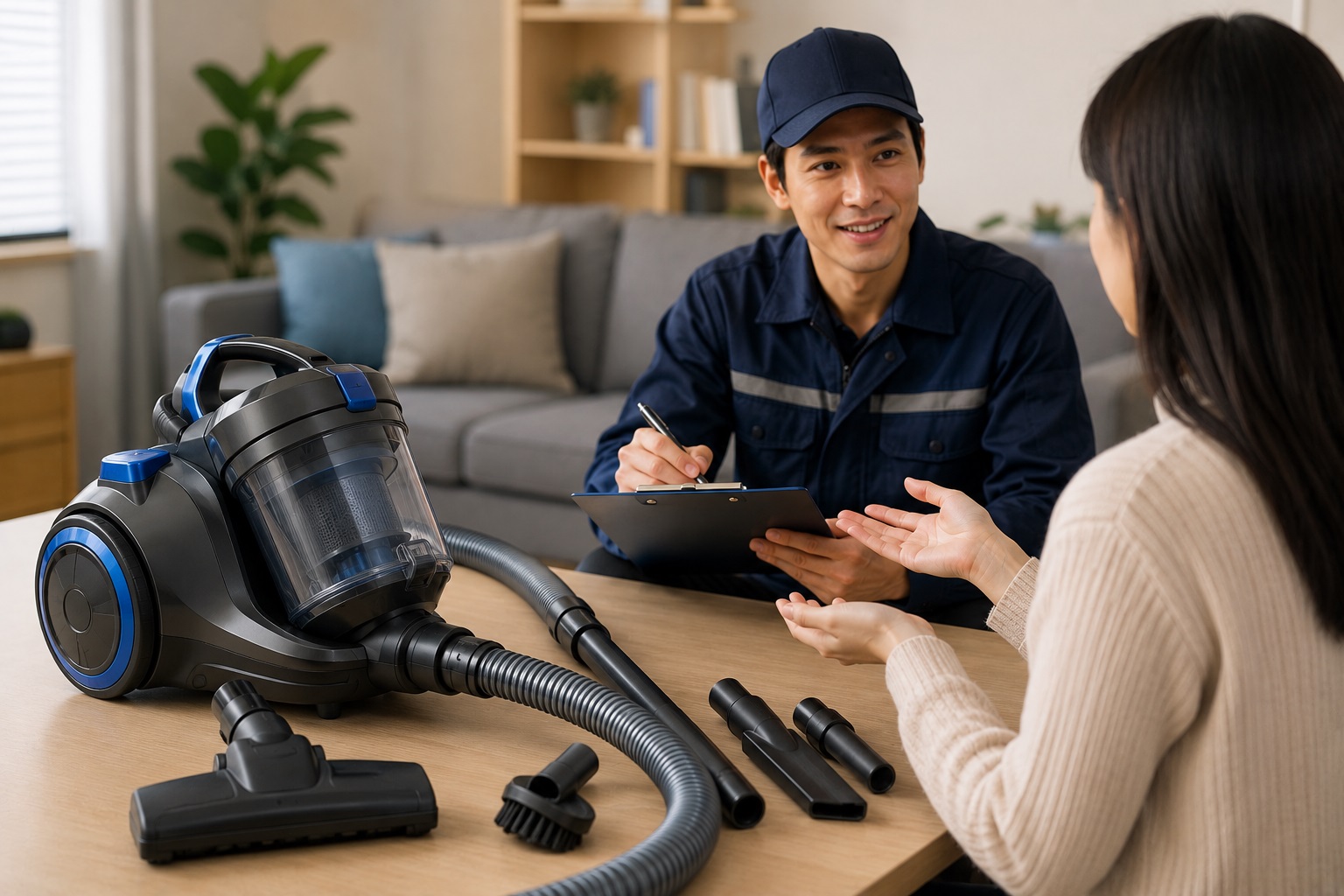
In the vacuum cleaner industry, customer complaints are often viewed as a customer service issue.
In reality, they are a business performance issue.
Every complaint affects:
Customer satisfaction
Brand reputation
Product reviews
Return rates
Warranty costs
Future sales
For distributors, private-label brands, retailers, and procurement managers, understanding how to effectively manage vacuum cleaner complaints is critical for long-term growth.
More importantly, successful companies focus not only on resolving complaints but also on preventing them from occurring in the first place.
This guide explores the most common causes of complaints, the hidden costs of poor after-sales management, and how manufacturers and distributors can work together to improve customer satisfaction.
📊 The Most Common Vacuum Cleaner Complaints in Today's Market
Before solving complaints, businesses must understand where they originate.
Based on common industry after-sales trends, complaints typically fall into several categories.
| Complaint Type | Estimated Frequency |
|---|---|
| Weak Suction Performance | 28% |
| Battery Problems | 22% |
| Motor Issues | 15% |
| Broken Accessories | 12% |
| Excessive Noise | 10% |
| Shipping Damage | 8% |
| Other Issues | 5% |
Procurement Insight
Many complaints are not caused by manufacturing defects alone.
Packaging, logistics, user education, and customer expectations also play significant roles.
🔍 Root Cause Analysis: Why Vacuum Cleaner Complaints Happen
Many businesses focus on symptoms instead of root causes.
A structured analysis typically identifies five major complaint sources.
Product Quality Issues
Examples:
Motor defects
Battery failures
Component inconsistencies
Product Design Problems
Examples:
Difficult maintenance
Poor ergonomics
Inefficient airflow design
Packaging and Transportation
Examples:
Broken accessories
Damaged housings
Missing parts
User Misunderstanding
Examples:
Incorrect assembly
Improper maintenance
Failure to clean filters
Customer Expectations
Examples:
Marketing promises exceeding actual performance
Mismatch between product positioning and customer needs
Buyer Action Guide
Before implementing solutions, identify whether complaints originate from quality, design, logistics, usage, or communication.
💰 The Hidden Cost of Customer Complaints
Many distributors underestimate the financial impact of complaints.
Consider the following example:
Example Scenario
Units Sold:
1,000
Return Rate:
10%
Average Return Cost:
$35
Direct Cost
100 returns × $35
= $3,500
However, direct costs are only part of the equation.
Additional losses may include:
Customer service expenses
Negative online reviews
Reduced retailer confidence
Warranty claims
Lost repeat purchases
Strategic Insight
Complaints are not simply support issues.
They are profit issues.
🚀 Building an Effective Complaint Management Process
An effective process should focus on both resolution and prevention.
Step 1: Acknowledge Quickly
Respond within 24 hours whenever possible.
Fast responses improve customer confidence.
Step 2: Document Thoroughly
Capture:
Product model
Serial number
Purchase date
Issue description
Photos or videos
Step 3: Classify the Issue
Categories may include:
Product defect
Shipping damage
User error
Warranty claim
Step 4: Resolve Efficiently
Possible solutions include:
Replacement
Repair
Refund
Troubleshooting support
Step 5: Analyze Patterns
Recurring complaints often reveal larger product or process issues.
📦 Success Case Study: Complaint Reduction Through Structured After-Sales Service
A European vacuum cleaner distributor experienced a return rate of approximately 15%.
Investigation revealed:
Inconsistent customer support
Limited troubleshooting resources
Poor communication with suppliers
Solution
The company implemented:
24-hour response targets
Standardized complaint reporting
Customer education materials
Enhanced communication with manufacturing partners
Results
Within six months:
Return rate dropped from 15% to 6%
Customer satisfaction increased by 25%
Repeat purchases increased by 18%
Key Lesson
Efficient after sales service improves both customer loyalty and profitability.
⚠️ Failure Case Study: When Complaint Management Fails
A distributor launched a new cordless vacuum cleaner without establishing a clear after-sales process.
Several issues emerged:
Battery protection problems
Packaging damage during transportation
Limited troubleshooting support
Results
Return rate exceeded 17%
Negative marketplace reviews increased
Retail partners reduced orders
Warranty costs rose significantly
Estimated Impact
Lost revenue and associated costs exceeded tens of thousands of dollars.
Key Lesson
Ignoring complaint management can quickly damage both profitability and reputation.
🏭 How an OEM Vacuum Manufacturer Helps Reduce Complaints
One of the most effective ways to reduce complaints is partnering with a reliable OEM vacuum manufacturer.
Professional manufacturers implement quality control systems that help prevent problems before products reach consumers.
Incoming Material Inspection
Verification of critical components.
Motor Performance Testing
Ensures stable suction and durability.
Battery Reliability Testing
Reduces charging and runtime issues.
Durability Testing
Validates long-term product performance.
Final Product Inspection
Identifies defects before shipment.
Packaging Validation
Reduces transportation-related damage.
Procurement Insight
The best vacuum cleaner supplier does not simply manufacture products.
It actively helps reduce future complaints.
📋 Complaint Management KPI Scorecard
Leading brands monitor complaint performance using measurable indicators.
| KPI | Target |
|---|---|
| Return Rate | <5% |
| Product Defect Rate | <2% |
| Customer Satisfaction Score | >90% |
| Warranty Claim Rate | <3% |
| First Response Time | <24 Hours |
| Resolution Time | <5 Days |
Buyer Action Guide
Track complaint trends monthly rather than reacting only when problems become severe.
🛡️ Creating a Customer Satisfaction Strategy
The strongest brands treat complaint management as part of a broader customer satisfaction strategy.
Successful companies focus on:
Product Quality
Reducing defects before shipment.
User Education
Providing clear instructions and maintenance guides.
Warranty Transparency
Making support processes simple and predictable.
Proactive Communication
Keeping customers informed throughout the resolution process.
Continuous Improvement
Using complaint data to improve future products.
🔮 Future Trends in After-Sales Service
The next generation of complaint management will increasingly rely on technology.
AI-Powered Customer Support
Faster responses and issue classification.
Predictive Maintenance
Identifying problems before failures occur.
Remote Diagnostics
Helping customers troubleshoot products online.
Smart Product Monitoring
Connected devices providing real-time performance feedback.
Manufacturers and distributors investing in these capabilities will gain significant advantages in customer satisfaction.
🤝 Why Complaint Management Creates Competitive Advantage
Many companies focus heavily on acquiring new customers.
The most successful brands focus equally on retaining existing customers.
A strong complaint management system helps:
Improve customer satisfaction
Reduce return rates
Lower warranty costs
Strengthen brand reputation
Increase repeat purchases
For distributors and private-label brands, complaint management is no longer just a support function.
It is a strategic growth tool.
✅ Conclusion
Successfully handling vacuum cleaner complaints requires more than responding to customer issues.
It requires understanding root causes, measuring complaint costs, implementing structured processes, and partnering with reliable manufacturers.
Businesses that proactively reduce complaints through strong after sales service, product quality improvements, and customer education consistently achieve higher levels of customer satisfaction and long-term profitability.
The companies that win in the future will not simply solve complaints faster.
They will prevent complaints from happening in the first place.
📌 Hashtags
Vacuum Cleaner Complaints, Handle Customer Complaint Vacuum, Vacuum Cleaner Supplier, OEM Vacuum Manufacturer, After Sales Service, Customer Satisfaction, Vacuum Product Quality, Vacuum Return Rate, Vacuum Warranty Management, Vacuum Complaint Reduction, Vacuum Customer Experience, Vacuum Technical Support, Vacuum Troubleshooting Guide, Vacuum Product Improvement, Vacuum Quality Control, Vacuum Defect Analysis, Vacuum Customer Retention, Vacuum Complaint Management, Vacuum Support Strategy, Vacuum Consumer Feedback, Vacuum Service Excellence, Vacuum Product Reliability, Vacuum Distribution Europe, Vacuum Cleaner Returns, Vacuum Customer Loyalty, Vacuum Product Testing, Vacuum Manufacturing Quality, Vacuum Warranty Claims, Vacuum Supply Chain Quality, Vacuum Customer Service KPI, Vacuum Product Performance, Vacuum Complaint Analytics, Vacuum Service Optimization, Vacuum Repair Support, Vacuum Product Development, Vacuum Engineering Support, Vacuum Retail Support, Vacuum E-commerce Service, Vacuum User Experience, Vacuum Product Inspection, Vacuum Brand Reputation, Vacuum Technical Assistance, Vacuum After-Sales Management, Vacuum Service Process, Vacuum Customer Support Team, Vacuum Industry Insights, Vacuum Business Growth, Vacuum Product Support, Lanxstar, Vacuum Service Strategy



