Hi, message us with any questions.
We're happy to help!





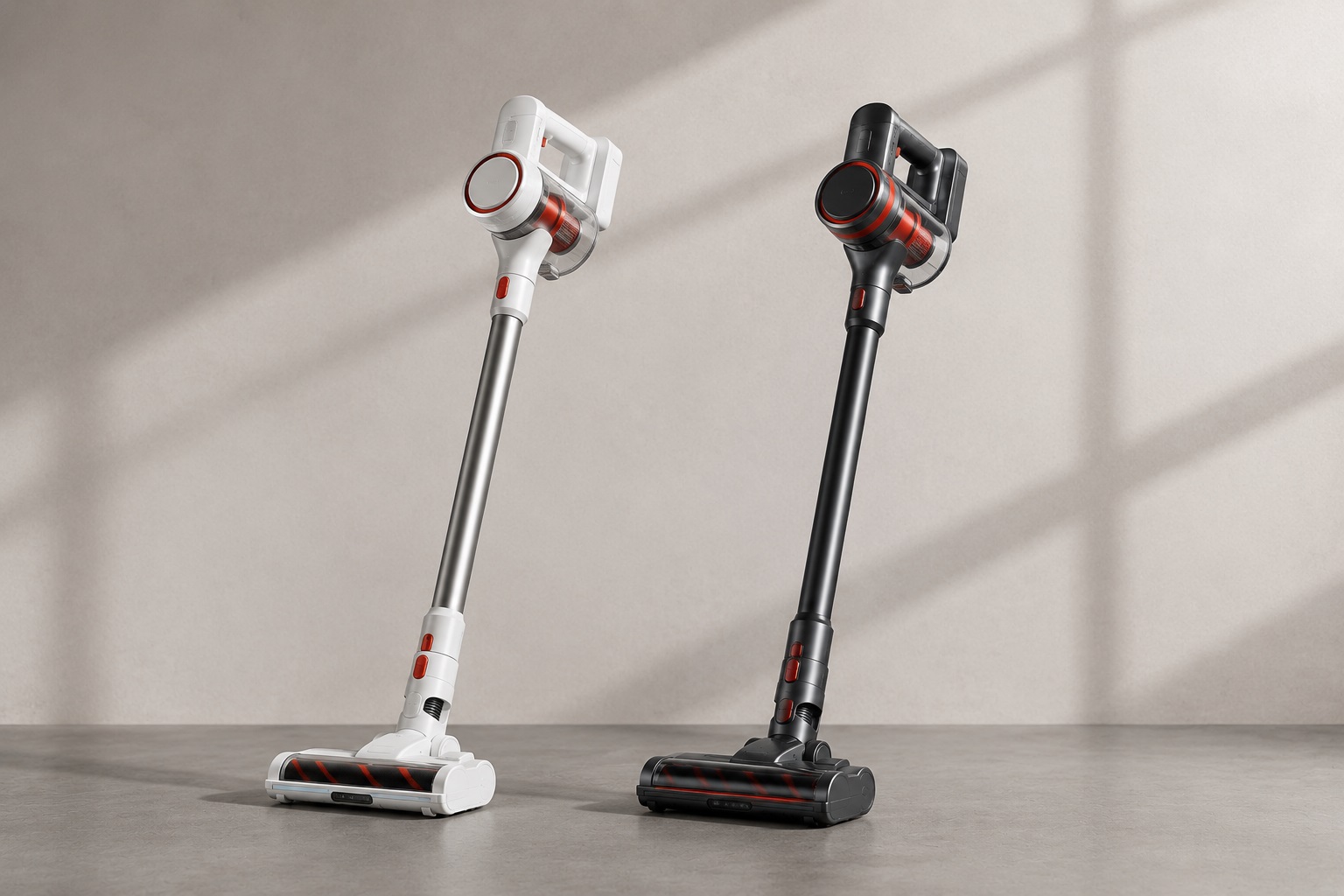
The global vacuum cleaner industry is becoming increasingly competitive as more distributors, retailers, Amazon sellers, and private-label brands enter the market.
For businesses looking to launch or expand a vacuum cleaner product line, one question consistently arises:
Should you choose OEM or ODM manufacturing?
At first glance, both options appear similar. Both allow companies to sell products without owning a factory. However, the long-term business implications can be dramatically different.
Choosing the wrong model may result in limited product differentiation, shrinking margins, and intense price competition. Choosing the right model can help build a scalable brand, increase profitability, and create sustainable competitive advantages.
This guide explains the differences between OEM vs ODM vacuum manufacturing, compares costs and ROI, provides real-world case studies, and offers a practical framework to help buyers make the right decision.
📊 Why OEM vs ODM Matters More Than Ever
The vacuum cleaner market is evolving rapidly.
Several trends are reshaping buyer expectations:
Growth of private-label products
Expansion of e-commerce brands
Rising competition on Amazon and online marketplaces
Increasing demand for specialized cleaning solutions
Consumer preference for differentiated products
As competition increases, businesses can no longer rely solely on low pricing.
They need stronger brand positioning and product differentiation.
This is where the OEM vs ODM decision becomes critical.
🔍 Understanding OEM and ODM Manufacturing
OEM (Original Equipment Manufacturer)
OEM manufacturing means the buyer controls the product concept while the factory provides production capabilities.
The buyer typically controls:
Product specifications
Product features
Accessories
Packaging
Branding
Market positioning
A professional vacuum cleaner manufacturer turns the buyer's vision into a market-ready product.
Buyer Action Guide
Choose OEM if product uniqueness and long-term brand growth are priorities.
ODM (Original Design Manufacturer)
ODM manufacturing means the factory already owns the product design.
The buyer typically customizes:
Logo
Packaging
Product color
User manuals
This approach is commonly used for private label vacuum projects.
Buyer Action Guide
Choose ODM if speed and low startup investment are your primary goals.
📈 OEM vs ODM Vacuum: Side-by-Side Comparison
| Factor | ODM | OEM |
|---|---|---|
| Initial Investment | Lower | Higher |
| Time to Market | Faster | Slower |
| Product Exclusivity | Low | High |
| Intellectual Property | Factory | Buyer |
| Product Differentiation | Limited | Strong |
| Competitive Protection | Weak | Strong |
| Long-Term Margins | Moderate | Higher |
| Brand Value Growth | Limited | Significant |
| Retail Expansion Potential | Moderate | High |
Procurement Insight
ODM helps companies enter the market.
OEM helps companies dominate the market.
💰 Cost Comparison: OEM vs ODM Vacuum Projects
Typical ODM Budget
| Item | Estimated Cost |
|---|---|
| Samples | $300-$1,000 |
| Packaging Design | $500-$3,000 |
| Initial Inventory | $10,000-$30,000 |
| Marketing | Variable |
Typical OEM Budget
| Item | Estimated Cost |
|---|---|
| Product Development | $3,000-$20,000 |
| Tooling | $5,000-$50,000 |
| Certifications | $2,000-$10,000 |
| Initial Inventory | $20,000-$100,000+ |
Key Insight
ODM minimizes startup risk.
OEM maximizes long-term business value.
🛣️ The OEM vs ODM Growth Roadmap
Most successful brands do not stay with one manufacturing model forever.
Phase 1: Market Validation
Recommended Model:
✅ ODM
Objectives:
Test demand
Reduce investment risk
Generate initial revenue
Phase 2: Brand Expansion
Recommended Model:
✅ Hybrid ODM + OEM
Objectives:
Improve product differentiation
Add exclusive accessories
Increase repeat purchases
Phase 3: Brand Leadership
Recommended Model:
✅ OEM
Objectives:
Product exclusivity
Intellectual property ownership
Premium market positioning
Buyer Action Guide
If annual sales exceed $500,000–$1 million, begin evaluating OEM opportunities.
📦 Success Case Study #1: Fast Market Entry Through ODM
A European e-commerce seller wanted to enter the cordless vacuum market quickly.
Instead of developing a new product from scratch, the company selected an ODM platform.
Results
Product launched within 90 days
Development costs significantly reduced
Market demand validated quickly
Key Lesson
ODM accelerates market entry.
📈 Success Case Study #2: OEM Creates Pricing Power
A distributor selling generic vacuum cleaners faced declining margins due to intense competition.
The company partnered with an OEM vacuum factory to develop:
Improved filtration
Exclusive accessories
Customized packaging
Results
Gross margin increased by 28%
Customer retention improved
Product reviews strengthened
Key Lesson
Differentiation creates pricing power.
📦 Success Case Study #3: Transitioning from ODM to OEM
A North American appliance company initially launched a private label vacuum through an ODM program.
After reaching approximately $2 million in annual sales, competition intensified.
The company invested in OEM development.
Improvements Included
Exclusive accessories
Better filtration systems
Improved battery performance
Premium packaging
Results
Within 18 months:
Average selling price increased by 16%
Gross margin improved by 21%
Repeat purchases increased
Retail partnerships expanded
Key Lesson
ODM accelerated entry.
OEM accelerated growth.
⚠️ Failure Case Study: The ODM Trap
A startup launched a generic private-label vacuum using a popular ODM design.
Initially, sales were strong.
However, within one year:
Competitors launched identical products
Advertising costs increased
Margins declined
Customer loyalty weakened
Results
Revenue growth slowed
Profitability decreased
Brand differentiation disappeared
Key Lesson
ODM helps launch products.
OEM helps build brands.
💹 ROI Comparison: OEM vs ODM
Assume two companies launch similar vacuum cleaner businesses.
Company A chooses ODM.
Company B chooses OEM.
After three years:
| Metric | ODM Brand | OEM Brand |
|---|---|---|
| Product Differentiation | Low | High |
| Average Selling Price | Lower | Higher |
| Repeat Purchase Rate | Moderate | Strong |
| Gross Margin | Lower | Higher |
| Brand Valuation | Limited | Greater |
Strategic Insight
OEM generally requires more investment but often delivers stronger long-term returns through pricing power and customer loyalty.
🛡️ Building a Competitive Moat Through Custom Vacuum Solutions
The strongest brands focus on assets competitors cannot easily replicate.
A custom vacuum solution can create long-term advantages through:
Exclusive Product Features
Functions unavailable elsewhere.
Proprietary Accessories
Additional recurring revenue.
Product Ecosystems
Replacement filters, attachments, and upgrades.
Design Ownership
Greater IP protection.
Premium Brand Positioning
Reduced dependence on discounts.
Buyer Action Guide
If competitors can easily copy your product, your brand needs stronger OEM differentiation.
📋 OEM vs ODM Quick Decision Matrix
Choose ODM If:
✔ You are launching your first product
✔ Capital is limited
✔ Speed is the top priority
✔ Market demand is unproven
Choose OEM If:
✔ You want higher margins
✔ Product exclusivity matters
✔ Long-term growth is important
✔ Brand differentiation is a priority
✔ You plan to scale globally
🔮 Future Trends Favoring OEM Manufacturing
Several industry trends increasingly support OEM development.
Smart Home Integration
Consumers expect differentiated technology.
Sustainability Requirements
Brands seek unique eco-friendly solutions.
Premium Consumer Segments
Exclusivity is becoming more valuable.
Retailer Expectations
Major retailers increasingly prefer differentiated products.
These trends make OEM manufacturing more attractive for ambitious brands.
🤝 Why Choosing the Right OEM Vacuum Factory Matters
Many buyers focus exclusively on manufacturing models.
However, the quality of the manufacturing partner often matters more.
A reliable vacuum cleaner manufacturer should provide:
Engineering expertise
Product development support
Compliance assistance
Quality management systems
Scalable production capacity
Long-term innovation capabilities
The right factory does more than manufacture products.
It helps build a brand.
✅ Conclusion
The debate around OEM vs ODM vacuum manufacturing is not about which model is universally better.
It is about which model is right for your current stage of growth.
ODM is ideal for market validation, lower investment, and faster launches.
OEM is ideal for differentiation, intellectual property ownership, higher margins, and long-term brand building.
For many successful companies, the optimal path is clear:
Start with ODM. Validate demand. Transition to OEM. Build a defensible brand.
The companies that thrive in the next decade will not simply sell vacuum cleaners.
They will own unique products, strong customer relationships, and sustainable competitive advantages.
📌 Hashtags
OEM vs ODM Vacuum, Vacuum Cleaner Manufacturer, OEM Vacuum Factory, Private Label Vacuum, Custom Vacuum Solution, Vacuum Cleaner OEM, Vacuum Cleaner ODM, Private Label Appliance Manufacturing, Vacuum Cleaner Product Development, Vacuum Cleaner Brand Building, Custom Vacuum Cleaner Design, Appliance Manufacturing Partner, Vacuum Cleaner Supplier, Vacuum Cleaner Exporter, Cordless Vacuum Development, Vacuum Cleaner Engineering, Private Label Home Appliances, OEM Manufacturing Strategy, ODM Manufacturing Strategy, Vacuum Cleaner Startup, Vacuum Cleaner Business, Home Appliance Branding, Vacuum Cleaner Procurement, Vacuum Cleaner Market Entry, Vacuum Cleaner Innovation, Product Customization, Manufacturing Partnership, Vacuum Cleaner Technology, Vacuum Cleaner Distribution, Appliance Product Development, Retail Vacuum Solutions, Smart Vacuum Manufacturing, Vacuum Cleaner Market Trends, Vacuum Cleaner Quality Control, Vacuum Cleaner Certification, Vacuum Cleaner Investment Strategy, Global Vacuum Supplier, Home Appliance OEM, Home Appliance ODM, Vacuum Cleaner Growth Strategy, Vacuum Cleaner Competitive Advantage, Appliance Industry Insights, Vacuum Cleaner Business Growth, Consumer Appliance Manufacturing, Vacuum Cleaner Product Launch, Vacuum Cleaner Supply Chain, Vacuum Cleaner Customization, Vacuum Industry Solutions, Lanxstar, Vacuum Cleaner Brand Strategy