


1. The Importance of Cleanliness in Restaurants 🍽️
In the restaurant industry, cleanliness is paramount—not only for guest satisfaction but also for health and safety. Restaurants experience a constant flow of foot traffic, spills, crumbs, and food debris, all of which need to be cleaned up quickly and efficiently to maintain a hygienic environment. A clean restaurant creates a more inviting atmosphere, reduces the risk of foodborne illnesses, and improves customer experience, leading to better reviews and repeat business.
However, restaurant cleaning can be particularly challenging due to the variety of messes—liquids, food crumbs, grease, and sticky substances—and the need to clean frequently and effectively. Choosing the right vacuum for heavy-duty cleaning tasks is crucial to ensure efficiency and hygiene. In this article, we will explore how the right vacuum cleaner can tackle the demanding cleaning tasks in a restaurant environment.
2. Key Features to Consider When Choosing a Vacuum for Restaurant Cleaning 🔍
When selecting a vacuum for restaurant cleaning, it’s important to focus on features that can handle the volume of debris, frequent spills, and the diverse surfaces found in a restaurant. Here are some important features to consider:
A. High Suction Power 🌀
One of the most critical features of a restaurant vacuum is its suction power. With constant food spills, crumbs, grease, and dust, a vacuum with high suction power is essential to effectively clean the floors and surfaces. A high-suction vacuum can remove both large and fine debris from carpets, hard floors, and even kitchen mats, ensuring a deep clean every time.
Example: Gourmet Bistro switched to high-suction vacuum cleaners in their dining area and kitchen, reducing cleaning time by 25% and maintaining a cleaner environment for their guests.
B. Energy-Saving Efficient Powerful Vacuum Cleaners ⚡
Energy-efficient vacuums provide the necessary power to clean effectively while using less electricity. In a high-volume restaurant environment where cleaning equipment is used frequently, an energy-saving vacuum can help reduce operational costs without compromising performance. These vacuums also help restaurants meet sustainability goals by reducing energy consumption.
Example: Seafood Shack invested in energy-efficient, powerful vacuums for their restaurant and saved up to 30% in energy costs annually, while still achieving the same level of cleanliness.
C. Restaurant-Specific Vacuums 🍴
Restaurant vacuums are designed to meet the unique cleaning needs of the foodservice industry. These vacuums are typically more durable, easier to maneuver, and come with specialized features like anti-microbial filters, which help maintain a hygienic environment. Restaurant vacuums are built to handle the messes typical of restaurant environments, including food particles, grease, and spills, while also being easy to clean and maintain.
Many restaurant vacuums also have a lightweight design, making them easy to use in tight spaces, such as between tables, around chairs, and in narrow aisles.
D. Wet and Dry Vacuum Cleaners 💧
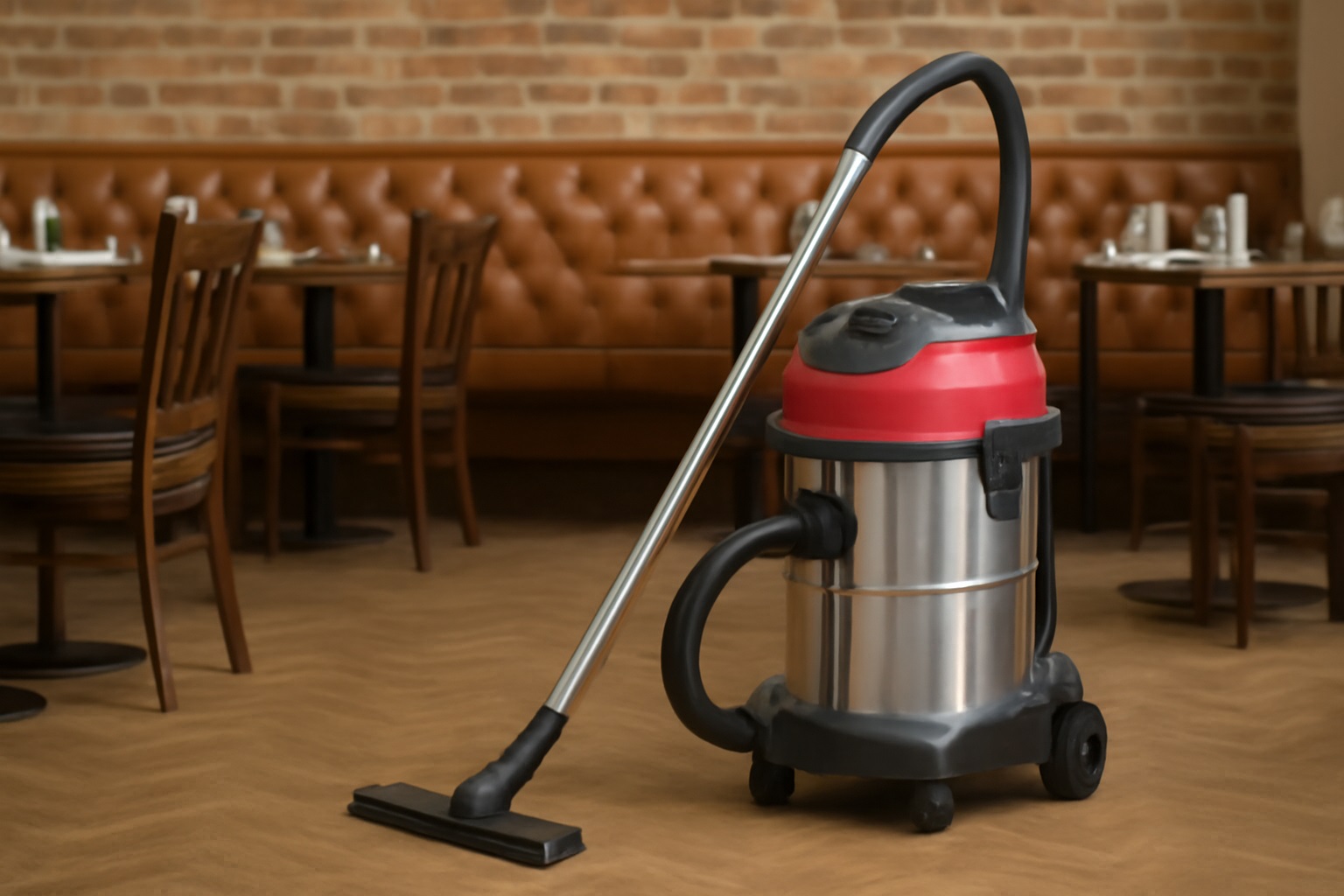
Wet and dry vacuum cleaners are highly versatile and essential in restaurant environments. These vacuums can handle both liquid spills (such as drinks, soup, or grease) and dry debris (like crumbs and dust). A wet and dry vacuum cleaner is particularly useful in kitchens and dining areas, where liquids are frequently spilled and need to be cleaned up immediately to avoid safety hazards.
Example: In The Italian Restaurant, wet and dry vacuums are used to clean up spills in the kitchen and dining areas, ensuring that the restaurant remains safe and clean for both guests and staff.
E. Upright Vacuum Cleaners 🏠
Upright vacuums are effective for cleaning large surface areas, especially carpeted floors. Many restaurant dining areas are carpeted, and an upright vacuum cleaner with strong suction power can clean these areas efficiently, removing food crumbs, dust, and dirt quickly. Upright vacuums are also easy to store and maneuver in open spaces.
However, for more confined or harder-to-reach areas, a different type of vacuum (like a cordless or handheld model) may be more effective.
F. Household Vacuum Cleaners 🏡
While household vacuum cleaners may seem like a budget-friendly option, they are generally not suitable for the heavy-duty cleaning required in restaurants. Household vacuums are designed for lighter cleaning tasks in residential settings and lack the durability, capacity, and power needed for frequent restaurant use.
For commercial and industrial cleaning, it is important to use vacuums specifically designed for restaurant environments to ensure efficiency and reliability.
3. How the Right Vacuum Helps Tackle Heavy-Duty Cleaning in Restaurants 🧑🍳
Cleaning in restaurants requires efficiency, speed, and thoroughness to meet both guest expectations and health regulations. Here’s how the right vacuum cleaner helps:
A. Speed and Efficiency ⏱️
In a busy restaurant, time is of the essence. High-suction vacuums with large dust capacity and specialized cleaning heads allow restaurant staff to clean large areas quickly without losing suction power. This means less time spent cleaning and more time spent serving guests.
Example: By switching to a high-suction commercial vacuum, The Diner reduced the time spent cleaning between service shifts by 40%, enabling staff to clean faster and more effectively.
B. Tackling a Variety of Messes 🧽
Restaurants often face a range of messes, from food spills to grease stains. The right vacuum cleaner, such as a wet and dry vacuum, can easily tackle these messes. Wet and dry vacuums can quickly absorb liquid spills and clean up dry food debris, ensuring a spotless restaurant environment.
Additionally, vacuums with specialized attachments, such as crevice tools and turbo brushes, allow staff to clean between tables, under equipment, and around tight corners where dust and crumbs tend to accumulate.
C. Maintaining a Safe and Hygienic Environment 🧼
Vacuuming regularly ensures that the restaurant is free from allergens, bacteria, and other pollutants that can build up on floors and surfaces. Using the right vacuum cleaner with advanced filtration, such as HEPA filters, helps trap dust, allergens, and other fine particles, improving air quality and ensuring a healthier dining environment for guests and staff.
D. Minimizing Disruption to Customers 🛑
The right vacuum cleaner can help minimize the disruption caused by cleaning. Vacuums designed for commercial use tend to operate more quietly than household models, ensuring that cleaning tasks do not disturb customers, particularly during busy hours. A vacuum with low noise levels enables staff to clean high-traffic areas without disturbing diners.
4. Benefits of Using the Right Vacuum for Restaurant Cleaning 🌟
A. Improved Guest Satisfaction 😊
A clean and hygienic restaurant creates a positive impression on guests and encourages them to return. By using the right vacuum, restaurants can ensure that floors, dining areas, and kitchens are spotless, helping to create a more enjoyable dining experience and earning higher customer satisfaction ratings.
B. Increased Cleaning Efficiency 🧹
The right vacuum significantly reduces cleaning time by providing faster and more efficient cleaning. With powerful suction, larger dust bags, and multi-functional features, staff can clean more areas in less time, ensuring that the restaurant stays clean throughout the day without interrupting service.
C. Reduced Long-Term Costs 💵
Investing in high-quality commercial vacuums saves money in the long run by reducing maintenance costs, increasing durability, and improving cleaning efficiency. Additionally, energy-efficient models reduce electricity costs, aligning with sustainability goals and reducing operational expenses.
5. Conclusion: Choose the Right Vacuum to Enhance Restaurant Cleaning ✅
Using the right vacuum for heavy-duty cleaning tasks in restaurants is essential to maintaining a clean, safe, and welcoming environment for both guests and staff. High-suction vacuums, wet and dry vacuums, and energy-efficient commercial vacuums provide the power, versatility, and reliability needed to tackle spills, crumbs, and grease in busy restaurant settings.
By investing in the right vacuum cleaner, restaurants can improve cleanliness, reduce cleaning time, enhance customer experience, and save on long-term operational costs.
Hashtags:
Upright Vacuum Cleaners, Household Vacuum Cleaners, High Suction Vacuum Cleaner, Energy-Saving Efficient Powerful Vacuum Cleaner, Restaurant Vacuum, Heavy-Duty Cleaning, Commercial Vacuum Cleaners, Wet and Dry Vacuum Cleaner, Vacuum for Restaurants, Kitchen Cleaning Vacuum, Restaurant Maintenance, Vacuum for High Traffic Areas, Lanxstar.