Hi, message us with any questions.
We're happy to help!





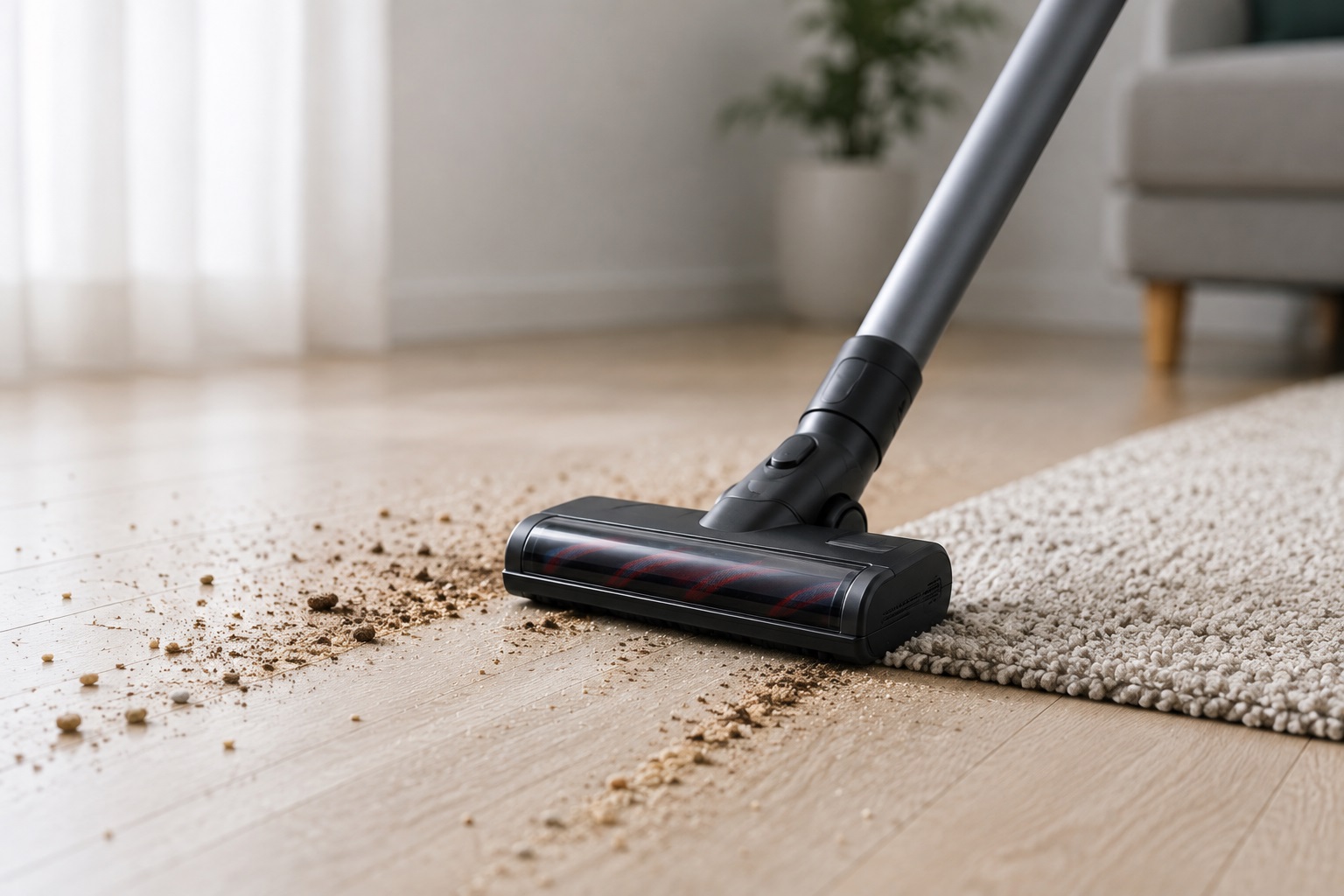
1. Does Higher Wattage Mean Better Vacuum Cleaner Suction?
One of the most common assumptions when buying a vacuum cleaner is simple:
More watts must mean more suction.
But is that really true?
The short answer is:
No. Higher wattage does not automatically mean better vacuum cleaner suction.
Wattage usually tells you how much electrical power the vacuum cleaner consumes or how much power is supplied to the motor. It does not directly tell you how efficiently that power is converted into airflow and vacuum pressure.
A well-engineered wet dry vacuum cleaner with lower wattage can sometimes deliver comparable or even better practical cleaning performance than a higher-watt machine if it uses a more efficient motor, optimized fan system, better sealing and lower-resistance airflow path.
⚡ Watts describe electrical input. Suction performance is the result of the complete vacuum system.
This distinction is particularly important for buyers comparing a High Suction Vacuum Cleaner, industrial vacuum cleaner, or commercial vacuum cleaner.
2. What Does Wattage Actually Mean on a Vacuum Cleaner?
Watts measure power.
On vacuum cleaner specifications, wattage commonly refers to:
Motor input power
Rated electrical power
Total machine power consumption
For example, a vacuum cleaner may be rated at:
1,000 W
1,200 W
1,400 W
At first glance, a 1,400 W machine may appear more powerful than a 1,000 W model.
However, the wattage figure primarily tells you how much electrical energy the machine uses.
It does not tell you:
How much airflow reaches the nozzle
How much vacuum pressure the machine creates
How efficient the motor is
How restrictive the filter is
How well the hose and airflow path are designed
How effective the floor tool is
That is why wattage should never be treated as a complete measure of vacuum cleaner performance.
3. What Actually Determines Vacuum Cleaner Suction?
Vacuum cleaner suction depends on several interacting factors.
The most important include:
Vacuum pressure
Usually measured in Pa, kPa, mbar or similar pressure units.
Airflow
Often measured in CFM, L/s, L/min or m³/h.
Motor efficiency
A more efficient motor can convert electrical input into useful airflow and pressure more effectively.
Fan design
The impeller or fan geometry affects pressure and airflow generation.
Sealing
Air leaks reduce useful suction.
Filter resistance
A restrictive or heavily loaded filter can reduce airflow.
Hose design
Diameter, length and internal restrictions affect air movement.
Cleaning tool design
The floor nozzle or crevice tool determines how effectively suction is applied to the cleaning surface.
🧹 Suction is a system result, not a wattage result.
4. Why Two 1,200 W Vacuum Cleaners Can Perform Differently
Imagine two vacuum cleaners with identical electrical power ratings.
Both use 1,200 W motors.
Would they clean equally well?
Not necessarily.
Vacuum Cleaner A may have:
Better fan efficiency
Tighter internal sealing
A smoother airflow path
Lower filter resistance
Better hose geometry
A more effective floor tool
Vacuum Cleaner B may have:
More airflow restrictions
Poor sealing
A restrictive filter
Long or narrow internal passages
Less efficient accessories
Even though both consume the same electrical power, Vacuum Cleaner A may deliver better practical cleaning performance.
This is why professional buyers should never select a commercial grade vacuum cleaner purely based on the motor wattage shown in a catalog.
5. Wattage vs kPa: What Is the Difference?
These two specifications measure different things.
Watts Measure Electrical Power
Watts tell you how much electrical power the vacuum cleaner consumes.
kPa Measures Vacuum Pressure
kPa stands for kilopascal and is a unit of pressure.
On a vacuum cleaner, kPa is commonly used to describe the pressure difference the machine can generate.
For example:
20 kPa = 20,000 Pa
A higher kPa figure usually indicates greater potential vacuum pressure under the specified test conditions.
💨 Therefore:
Watts = electrical input
kPa = pressure capability
A higher-watt machine does not automatically have a higher kPa value.
Likewise, a machine with strong kPa performance does not necessarily have the highest electrical wattage.
6. Wattage vs Airflow: Which Matters More?
Airflow is essential because the moving air carries dirt and debris through the hose and into the collection tank.
High airflow can be particularly useful when collecting:
Loose dust
Sawdust
Packaging debris
Fine particles
Light workshop waste
Dry debris over large floor areas
For applications such as logistics warehouse cleaning and factory floor cleaning, airflow can significantly influence cleaning efficiency.
📦 A warehouse vacuum may need to move large volumes of loose material.
In this case, a high wattage number alone tells the buyer very little.
The machine must also generate suitable airflow and maintain it through the hose, filter and cleaning tool.
7. Why More Watts Can Sometimes Mean More Heat and Energy Use
A higher wattage motor consumes more electrical power.
That can also mean:
Higher energy use
More heat generation
Greater electrical load
Potentially higher operating costs
This becomes important when selecting an energy efficient vacuum cleaner.
For commercial environments where equipment operates every day, energy efficiency can influence total ownership cost.
⚡ Hotels, warehouses, factories, offices and cleaning contractors may operate vacuum cleaners for hundreds or thousands of hours over their service life.
A machine that achieves strong practical performance with lower power consumption can therefore offer meaningful operational benefits.
This is why the search for an Energy-Saving Efficient Powerful Vacuum Cleaner should focus on performance per unit of energy—not simply the highest wattage.
8. Case Study: Warehouse Cleaning
Consider a global distributor supplying equipment to a large warehouse.
The warehouse needs vacuum cleaners for:
Loading zones
Packing areas
Shelving aisles
Maintenance rooms
General floor cleaning
The procurement manager initially compares three machines based on wattage.
Machine A: high wattage
Machine B: medium wattage
Machine C: lower wattage but optimized airflow and accessories
After sample testing, Machine C performs efficiently on loose dust, cardboard fragments and packaging waste.
Why?
Because the complete vacuum system is well matched to the cleaning task.
It has suitable airflow, an appropriate hose diameter, an efficient floor tool and practical filtration.
📊 The lesson: higher wattage does not automatically produce better warehouse cleaning performance.
For buyers looking for an industrial wet and dry vacuum cleaner for warehouse cleaning supplier, application testing is often more valuable than comparing watts alone.
9. Case Study: Hotel Cleaning
Hotels have completely different priorities.
A hotel purchasing team may be looking for:
Good cleaning performance
Low noise
Easy maneuverability
Moderate machine weight
Low energy consumption
Simple maintenance
🏨 A very high-wattage machine may not be the best choice if it is heavy, noisy and inefficient.
A Portable Quiet Vacuum Cleaner or Fast Lightweight Vacuum Cleaner may create more value for housekeeping teams.
The same principle applies to a commercial vacuum cleaner for hotel use.
The ideal product should provide enough suction for the cleaning task while also being easy to operate in guest-facing environments.
10. Wet Dry Vacuum Cleaner Wattage: What Buyers Should Evaluate
A wet and dry vacuum cleaner must handle both dry material and liquids.
This creates design requirements that cannot be judged from watts alone.
Buyers should also evaluate:
💧 Wet pickup performance
💧 Float protection
💧 Tank capacity
💧 Drainage
💧 Hose design
💧 Motor protection
💧 Filtration configuration
💧 Wheel stability
A Large-Capacity Wet Dry Vacuum Cleaner may improve productivity by reducing emptying frequency.
However, a larger tank becomes significantly heavier when filled with liquid.
This means mobility and drainage design are important.
A powerful motor cannot compensate for a machine that is difficult to move or empty.
11. Does a Higher-Watt Vacuum Always Have Higher kPa?
No.
Motor wattage and vacuum pressure are related only indirectly.
The way the motor and fan convert electrical input into pressure depends on engineering efficiency.
For example, two machines might both consume around 1,200 W, yet one may generate a higher maximum vacuum pressure because its fan design and sealing are more efficient.
Conversely, a higher-watt motor may consume more electricity without delivering a proportional increase in useful pressure.
This is why buyers should compare:
Watts + kPa + airflow
rather than watts alone.
For R&D engineers, a pressure-versus-airflow performance curve can provide even more useful information where available.
12. What About Air Watts?
Air Watts are another specification sometimes used to describe vacuum performance.
Unlike electrical watts, Air Watts are intended to represent power in the moving air and therefore relate to both airflow and pressure.
The concept is useful because it recognizes that effective suction requires both.
However, Air Watt figures should still be compared carefully.
Different testing conditions or measurement points can produce figures that are not directly comparable.
🔬 Before comparing Air Watts between two vacuum cleaners, buyers should ask:
What test method was used?
Where was the measurement taken?
Was the complete machine tested?
Were the same hose and accessories installed?
Were the filters clean?
Are the test conditions comparable?
13. Filter Design Can Reduce Real-World Suction
Filtration is one of the most important factors influencing actual vacuum performance.
A clean filter allows air to move more easily.
As the filter collects dust, resistance can increase.
This can reduce airflow.
For a HEPA filter vacuum cleaner, buyers should therefore evaluate both filtration efficiency and airflow management.
Questions to ask include:
What filter standard is used?
What is the filter surface area?
Is there a pre-filter?
How is the filter cleaned?
Is filter cleaning manual or automatic?
How often is replacement required?
Are replacement filters easily available?
🔧 A machine with impressive wattage can still perform poorly if the filtration system becomes heavily restricted during normal operation.
14. Construction Site Cleaning: Power Is Only One Factor
Construction environments can place significant demands on cleaning equipment.
A wet dry vacuum cleaner for construction site use may need to handle:
Dust
Chips
Debris
Small fragments
Liquid spills
Material around tools and machinery
🏗️ Suction power is important, but construction durability matters too.
Buyers should evaluate:
Hose durability
Tank strength
Filter performance
Motor protection
Accessory design
Wheel strength
Dust characteristics
Duty cycle
If hazardous or regulated dust is present, suitable certified equipment may be required according to local regulations.
A generic heavy duty vacuum cleaner should not automatically be assumed to be appropriate for every construction environment.
15. Dual Motor Vacuum Cleaner: Does Two Motors Mean Better Suction?
A dual motor vacuum cleaner may provide greater performance potential than a single-motor unit, depending on how the machine is designed.
But two motors do not automatically mean twice the suction.
Additional motors can also increase:
Power consumption
Weight
Noise
Heat
Machine size
Maintenance requirements
Cost
For demanding industrial environments, a dual motor configuration may be appropriate.
For lighter commercial use, a well-engineered single-motor machine may be more efficient.
The correct motor configuration depends on the workload.
16. How Global Buyers Should Compare Industrial Vacuum Cleaner Specifications
For professional sourcing, create a standard comparison sheet.
Ask every industrial vacuum cleaner supplier to provide comparable data.
Important specifications include:
Rated motor power: W
Vacuum pressure: kPa, Pa or mbar
Airflow: CFM, L/s or m³/h
Air Watts: if available
Tank capacity: nominal and usable capacity
Tank material: plastic or stainless steel vacuum tank
Noise: dB under stated test conditions
Hose: diameter and length
Filtration: filter type and applicable standard
Wet pickup: liquid capacity and protection design
Machine weight: dry and filled conditions where relevant
Accessories: included and optional tools
The more standardized the data, the easier it is to compare suppliers fairly.
17. Case Study: Wholesale Buyer Comparing Three Factories
Imagine a European distributor sourcing a new commercial vacuum cleaner range.
Supplier A offers the highest wattage.
Supplier B offers the lowest vacuum cleaner price wholesale.
Supplier C offers moderate wattage but provides complete airflow, kPa, filtration, noise and durability information.
The distributor orders samples from all three factories.
Testing includes:
🧹 Dry debris pickup
💧 Wet pickup
🔇 Noise
🛞 Mobility
🔧 Filter maintenance
⏱️ Repeated use
📦 Packaging durability
The test shows that Supplier C offers the best balance of cleaning performance, usability and operating efficiency.
This demonstrates why procurement teams should avoid assuming that the most powerful electrical rating offers the best overall product.
18. What OEM and Private-Label Buyers Should Ask
For a bulk or customized order, technical performance is only one part of the buying decision.
An OEM industrial vacuum cleaner manufacturer should also be evaluated for:
Engineering support
Quality control
Production capacity
Motor consistency
Supplier management
Packaging capability
Spare parts
Warranty support
Compliance documentation
OEM branding options
For an OEM vacuum cleaner, ODM vacuum cleaner, or private label vacuum cleaner, customization may include:
Product color
Logo
Packaging
Accessories
Power cord
Plug type
Voltage
Frequency
Labels
User manuals
🌍 Buyers working with a vacuum cleaner manufacturer in China should confirm all market-specific electrical and compliance requirements before mass production.
19. Higher Wattage and the Best Budget Vacuum Question
Consumers searching for the best vacuum on a budget, best budget hoover, good budget vacuum, or best affordable vacuum often use motor wattage as a shortcut.
That can be misleading.
A low-cost vacuum with very high wattage may:
Consume more electricity
Be noisier
Have weaker filtration
Use lower-quality accessories
Require more maintenance
Meanwhile, a lower-watt but better-engineered machine may provide stronger overall value.
💰 The best value hoover is not necessarily the vacuum with the most watts.
The better question is:
How much useful cleaning performance do I get for the purchase price and operating cost?
20. Why Efficiency Matters More Than Raw Power
Modern vacuum engineering increasingly focuses on efficiency.
That means generating useful pressure and airflow without wasting unnecessary energy.
An efficient system may include:
Optimized motor design
Efficient fan geometry
Reduced internal leakage
Smooth airflow pathways
Appropriate hose sizing
Balanced filtration
Well-designed accessories
This allows manufacturers to improve cleaning performance without relying only on higher wattage.
For commercial operators, efficiency can reduce energy use and improve long-term operating economics.
For manufacturers, it can support the development of lighter, quieter and more competitive products.
⚙️ Good vacuum engineering is about converting power efficiently—not simply consuming more power.
21. Common Mistakes Buyers Make When Reading Vacuum Specifications
Professional and consumer buyers often make several recurring mistakes.
Mistake 1: Choosing the Highest Wattage
This ignores efficiency and system design.
Mistake 2: Comparing kPa Without Airflow
Strong pressure does not automatically mean strong debris transport.
Mistake 3: Ignoring Filter Loading
Performance can change as the filter collects dust.
Mistake 4: Ignoring Accessories
A poor floor nozzle can reduce practical cleaning efficiency.
Mistake 5: Comparing Numbers from Different Test Methods
Supplier data may not always be directly comparable.
Mistake 6: Ignoring the Application
A hotel, warehouse and construction site have very different requirements.
Avoiding these mistakes can significantly improve procurement decisions.
22. How to Choose a High Suction Vacuum Cleaner Correctly
When searching for a high suction power vacuum cleaner, use a structured process.
First, define the application.
Are you cleaning:
A warehouse?
A hotel?
A factory?
A workshop?
A vehicle?
A construction site?
A retail store?
Second, define the debris.
Is it:
Fine dust?
Large dry debris?
Sawdust?
Packaging material?
Liquids?
Mixed waste?
Third, compare specifications.
Look at:
Airflow, kPa, watts, filtration, tank capacity, hose design and accessories.
Finally, test the vacuum under conditions similar to the intended application.
This gives buyers far more useful information than motor wattage alone.
23. Frequently Asked Questions
Does More Watts Mean More Vacuum Suction?
Not necessarily. Watts measure electrical power input. Actual suction depends on airflow, vacuum pressure, motor efficiency, filtration and complete system design.
Is a 1,400 W Vacuum Better Than a 1,000 W Vacuum?
Not automatically. The 1,000 W machine may be more efficient or better designed. Compare airflow, kPa and real-world cleaning performance.
Does Higher kPa Mean Better Suction?
Higher kPa indicates greater vacuum pressure under the specified test conditions, but overall cleaning also depends on airflow and system design.
What Is the Best Wattage for a Wet Dry Vacuum Cleaner?
There is no universal best wattage. The appropriate power level depends on the application, motor efficiency, tank size, filtration, hose system and required cleaning performance.
Should Commercial Buyers Choose the Most Powerful Motor?
No. Commercial buyers should focus on productivity, durability, energy consumption, maintenance, noise and total cost of ownership.
How Can I Compare Vacuum Cleaner Suppliers?
Request standardized data for watts, airflow, vacuum pressure, filtration, noise, tank capacity, hose configuration, accessories, warranty and manufacturing support.
24. Conclusion: Higher Wattage Does Not Automatically Mean Better Suction
So, does higher wattage mean better vacuum cleaner suction?
Not necessarily.
Watts tell you how much electrical power the machine consumes.
They do not directly tell you how much useful suction reaches the cleaning surface.
Actual vacuum performance depends on the interaction between:
airflow, vacuum pressure, motor efficiency, fan design, filtration, hose geometry, sealing and cleaning tools.
For global buyers sourcing a wet dry vacuum cleaner, industrial vacuum cleaner, or commercial vacuum cleaner, the best approach is to compare complete-system performance rather than focusing on a single number.
For distributors and private-label buyers, manufacturing consistency, quality control, customization, spare parts and after-sales support should also be part of the decision.
Whether you are searching for a High Suction Vacuum Cleaner, warehouse cleaning equipment, hotel cleaning equipment or a customized OEM wet dry vacuum solution, the goal should always be the same:
Choose the machine that converts electrical power into useful cleaning performance most effectively.
For Lanxstar wet dry vacuum cleaner solutions, OEM/ODM cooperation and wholesale sourcing information, visit www.lxvacuum.com.
If you are interested, please feel free to contact us.
50 Related SEO Keywords
vacuum cleaner wattage, does higher wattage mean better suction, vacuum cleaner suction power, watts vs suction power, vacuum cleaner motor power, High Suction Vacuum Cleaner, Portable Quiet Vacuum Cleaner, Multi-Functional Durable Vacuum Cleaner, Fast Lightweight Vacuum Cleaner, Energy-Saving Efficient Powerful Vacuum Cleaner, Large-Capacity Wet Dry Vacuum Cleaner, wet dry vacuum cleaner, wet and dry vacuum cleaner, industrial vacuum cleaner, commercial vacuum cleaner, industrial vacuum cleaner supplier, vacuum cleaner manufacturer, industrial cleaning equipment, commercial cleaning equipment, vacuum cleaner supplier, vacuum cleaner manufacturer in China, industrial vacuum cleaner factory, wholesale vacuum cleaner, bulk vacuum cleaner purchase, OEM vacuum cleaner, ODM vacuum cleaner, private label vacuum cleaner, cleaning equipment supplier, industrial equipment supplier, warehouse cleaning solution, construction site cleaning equipment, hotel cleaning equipment, factory floor cleaning, logistics warehouse cleaning, car detailing vacuum cleaner, facility management cleaning equipment, HEPA filter vacuum cleaner, high suction power vacuum cleaner, heavy duty vacuum cleaner, dual motor vacuum cleaner, stainless steel vacuum tank, low noise vacuum cleaner, energy efficient vacuum cleaner, wet and dry suction system, industrial dust extractor, commercial grade vacuum cleaner, OEM industrial vacuum cleaner manufacturer, Lanxstar, vacuum manufacturer, vacuum cleaner maker