Hi, message us with any questions.
We're happy to help!





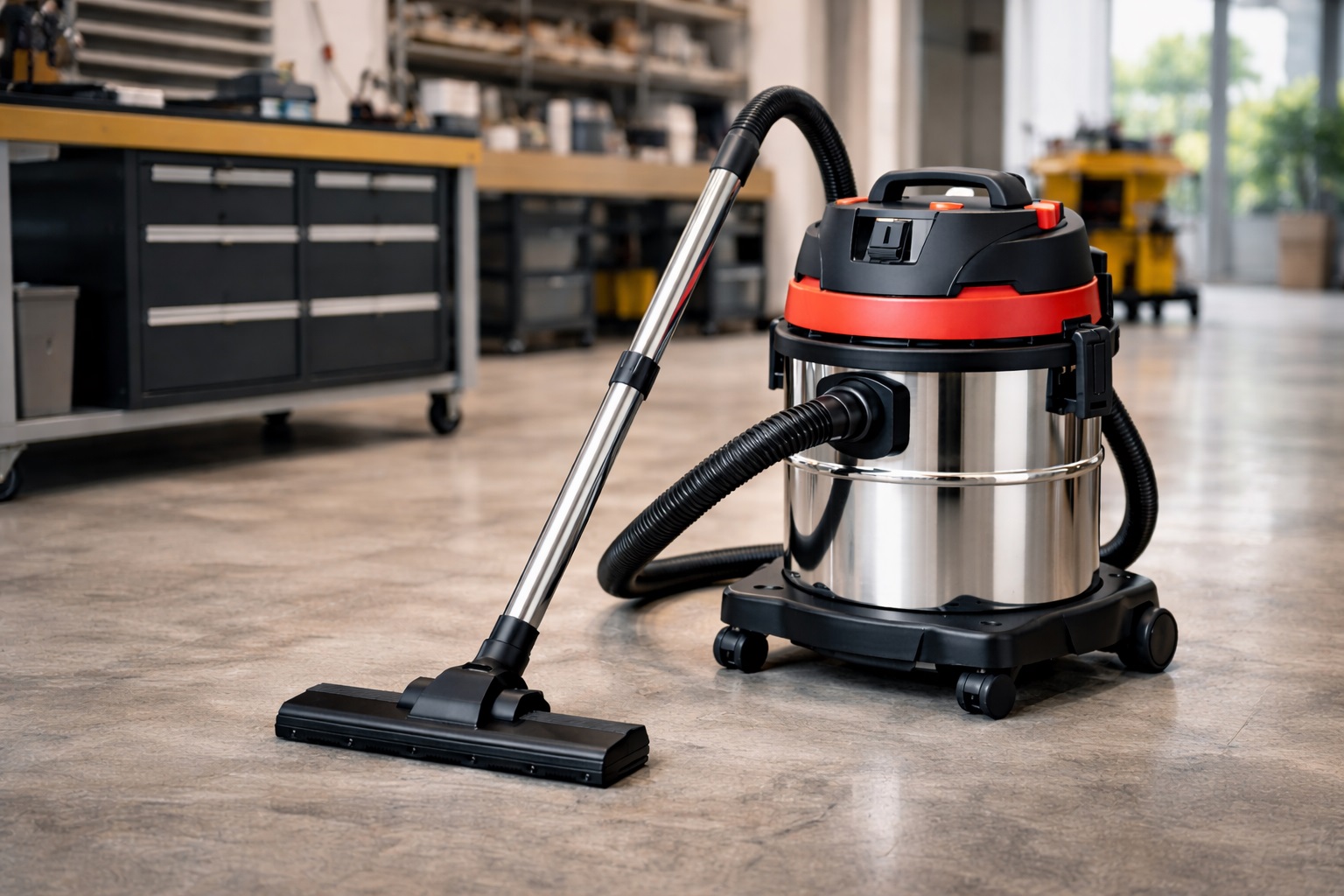
(Target Audience: European & Middle Eastern Commercial Vacuum Distributors & B2B Buyers Serving Southeast Asia)
Across Southeast Asia, thousands of small businesses still rely on household vacuum cleaners in commercial environments.
The reason is simple:
Lower upfront cost.
But what appears economical at purchase often becomes expensive in operation.
The gap between commercial 20L–30L vacuum systems and consumer household models is not incremental.
It is structural.
And distributors who educate their clients about this difference position themselves as long-term partners — not product sellers.
🏢 ① Designed for Different Duty Cycles
Household vacuum cleaners are engineered for:
10–20 minutes of operation
1–3 uses per week
Light residential debris
Commercial environments require:
2–6 hours of daily runtime
Continuous multi-room cleaning
Heavy debris and liquid handling
A 20L–30L Multi-Functional Durable Vacuum Cleaner is built with:
Copper motor windings
Enhanced airflow cooling
Reinforced housing
Industrial-grade internal components
Consumer units, when pushed into commercial duty cycles, overheat rapidly.
Overheating leads to motor degradation and shortened lifespan.
📊 ② Structural Comparison: Household vs Commercial 20L–30L
| Metric | Household Vacuum | Commercial 20L–30L |
|---|---|---|
| Daily Runtime Capacity | 15–30 minutes | 3–6+ hours |
| Motor Lifespan | 300–500 hours | 1500–3000+ hours |
| Wet Handling | No | Yes (wet and dry vacuum cleaner) |
| Tank Capacity | 1–5L | 20–30L |
| Suction Stability | Declines under heat | Stable airflow |
| Duty Cycle | Intermittent | Continuous |
| Business Noise Compliance | Not optimized | Quiet Vacuum Cleaner options |
| Lifecycle Cost | High replacement frequency | Lower long-term cost |
This is not a minor upgrade.
It is a category shift.
🌬️ ③ Suction Stability Under Commercial Stress
Many consumer models advertise high wattage.
But wattage does not equal sustained performance.
A true High Suction Vacuum Cleaner maintains:
Consistent kPa levels
Stable airflow
Minimal performance drop under load
Commercial 20L–30L units are engineered for suction consistency during:
Post-construction cleanup
Restaurant grease removal
Hotel corridor cleaning
Contractor multi-site operations
Consumer units often experience:
Rapid filter clogging
Motor heat buildup
Suction loss within months
In commercial cleaning, unstable suction directly increases labor hours.
💧 ④ Wet-Dry Capability: A Baseline Requirement in Southeast Asia
Most household models are dry-only.
In Southeast Asia, businesses frequently deal with:
Rainwater intrusion
Beverage spills
Kitchen grease
High humidity environments
A wet and dry vacuum cleaner eliminates the risk of liquid-induced motor damage.
For restaurants, hotels, and cleaning contractors, wet-dry capability is operationally essential.
Consumer machines simply cannot operate safely in these conditions.
⚡ ⑤ Energy Efficiency Under Continuous Operation
When operating multiple hours daily, electricity efficiency matters.
An Energy-Saving Efficient Powerful Vacuum Cleaner offers:
Optimized airflow-to-power ratio
Reduced thermal stress
Lower energy waste
Consumer units running continuously often draw inefficient power, creating:
Higher energy cost
Motor overheating
Faster internal wear
Over 24–36 months, energy inefficiency compounds into measurable financial loss.
🌿 ⑥ Filtration Standards & Air Quality Expectations
Commercial environments increasingly require:
Stable indoor air quality
Reduced allergen circulation
Dust containment
A professional HEPA Filter Vacuum Cleaner includes:
Sealed airflow systems
Industrial-grade filtration media
Replaceable high-capacity filters
Consumer HEPA labels vary widely and often degrade quickly under commercial stress.
For hotels, offices, and schools, filtration consistency affects brand perception.
📉 ⑦ Failure Case: The Hidden Cost of “Saving Money”
Case Example – Cleaning Contractor in Vietnam:
A contractor purchased 10 household units to reduce upfront cost.
Within 8 months:
7 units experienced motor failure
3 required full replacement
Downtime disrupted contracts
Total replacement + labor loss exceeded the cost of purchasing commercial 30L units initially.
Short-term savings became long-term expense.
This scenario repeats across Southeast Asia.
💰 ⑧ Lifecycle Cost Model
Household vacuum:
Lower upfront cost
6–12 months lifespan under commercial stress
Frequent repair or replacement
Commercial 20L–30L vacuum:
Higher initial investment
2–4+ years operational lifespan
Reduced downtime
Stable suction performance
When calculated per operational hour, commercial systems typically deliver lower total ownership cost.
Businesses do not operate on purchase price.
They operate on reliability.
🔇 ⑨ Noise & Brand Protection
Consumer models often exceed comfortable operational noise thresholds.
A commercial-grade Quiet Vacuum Cleaner is engineered for:
Hospitality environments
Office buildings
Retail during operational hours
Noise complaints damage guest experience and workplace productivity.
Noise control is part of professional design.
🛡️ ⑩ Structural Build Quality
Commercial vacuums integrate:
Stainless steel tanks
Reinforced wheels
Thickened hoses
Industrial motor insulation
Household units use lightweight plastic components designed for limited stress.
Structural durability separates commercial equipment from consumer products.
Strategic Conclusion: Misclassification Is a Cost Multiplier
Using household vacuum cleaners in commercial environments is not cost-saving.
It is risk accumulation.
Commercial 20L–30L vacuum systems outperform consumer models because they are engineered for:
Continuous duty cycles
Stable suction under load
Wet-dry flexibility
Energy-efficient operation
Professional HEPA filtration
Business-compliant noise control
For distributors and B2B buyers, the responsibility is clear:
Educate clients on lifecycle economics.
Under-specification leads to warranty claims, dissatisfaction, and brand damage.
Commercial environments demand commercial systems.
Anything less is temporary.
Suitable Readers
European commercial vacuum distributors
Middle Eastern B2B vacuum importers
Southeast Asia equipment wholesalers
Hospitality procurement managers
Cleaning contractors
Commercial vacuum product engineers
Hashtags
wet and dry vacuum cleaner, Multi-Functional Durable Vacuum Cleaner, High Suction Vacuum Cleaner, Energy-Saving Efficient Powerful Vacuum Cleaner, HEPA Filter Vacuum Cleaner, Quiet Vacuum Cleaner, commercial vs household vacuum, 20L commercial vacuum cleaner, 30L commercial vacuum cleaner, stainless steel tank vacuum cleaner, copper motor commercial vacuum, industrial wet dry vacuum supplier, B2B vacuum distributor Europe, Middle East vacuum importer, hospitality vacuum solution, contract cleaning equipment solution, professional suction cleaning equipment, durable commercial vacuum system, energy efficient commercial vacuum, reinforced wheel vacuum cleaner, commercial vacuum resale opportunity, private label vacuum cleaner OEM, Southeast Asia cleaning equipment, Lanxstar



