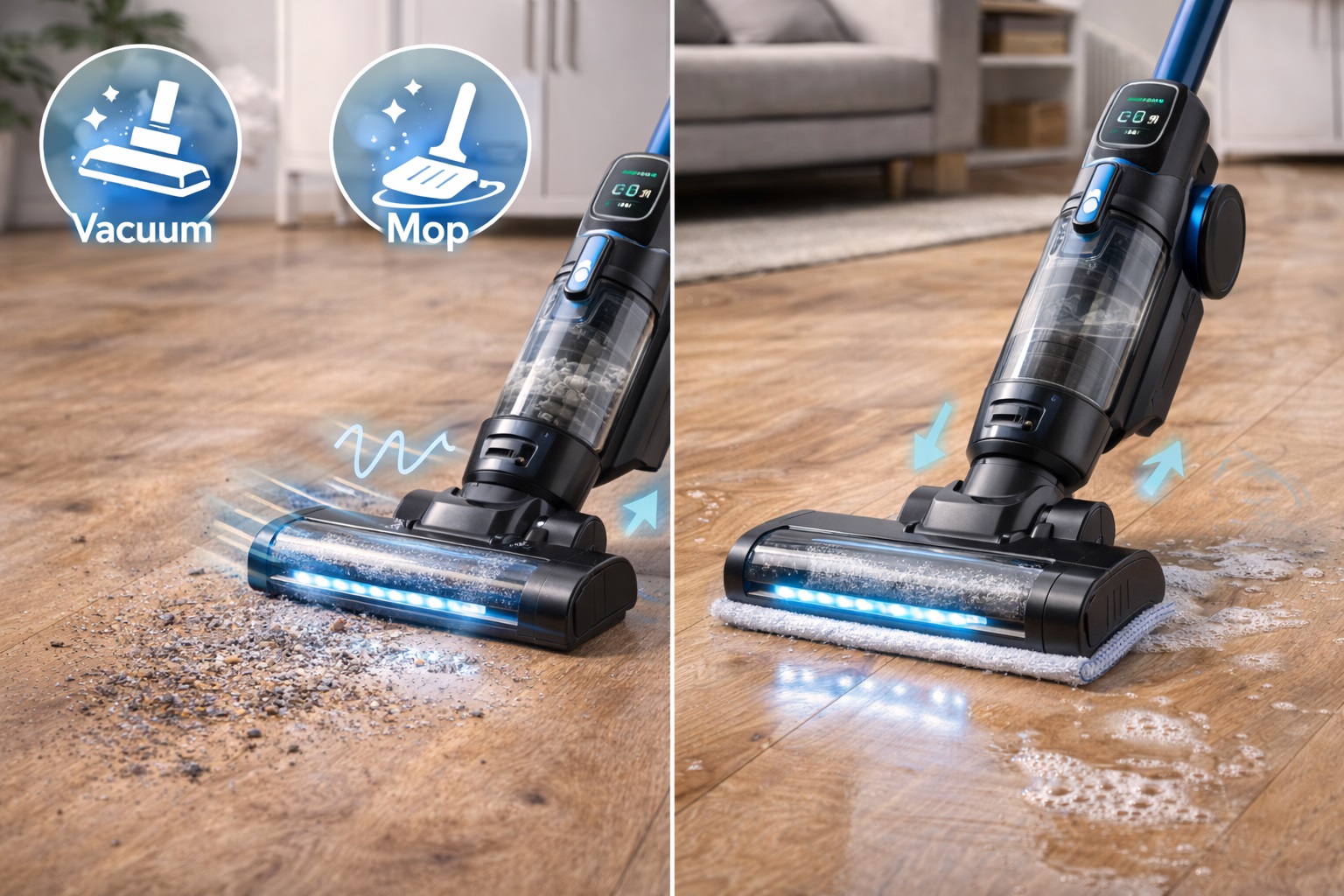
What This Question Really Means for B2B Buyers in Europe & the Middle East
“Can a vacuum mop floors?”
This question is everywhere—on Google, on e-commerce platforms, and in distributor conversations.
But for European & Middle Eastern B2B vacuum cleaner buyers, this is not a simple feature question.
It is a signal.
It signals that:
Traditional cleaning workflows feel inefficient
Users want fewer machines, not more
Time, labor, and storage costs matter more than ever
This article explains why this question has become so common, what users actually expect when they ask it, and how B2B buyers should interpret it when building product portfolios.
No hype.
No consumer gimmicks.
Only market logic + product strategy.
Who This Article Is For
European & Middle Eastern B2B vacuum cleaner buyers
Importers and distributors planning next-generation product lines
Product managers and sourcing teams
Cleaning industry entrepreneurs and decision-makers
Why This Question Suddenly Matters
Five years ago, users asked:
“Does it vacuum well?”
Today, they ask:
“Can it vacuum and mop?”
This shift is not about curiosity—it’s about workflow fatigue.
Users are tired of:
For B2B buyers, this question reveals changing expectations, not just demand for a new feature.
What Users Actually Mean by “Vacuum + Mop”
When users ask if a vacuum can mop floors, they usually don’t mean:
They mean:
This is why wet and dry vacuum cleaner solutions are gaining attention—they promise process reduction, not perfection.
The Rise of Wet & Dry Solutions
Seen in:
These products address a simple frustration:
“Why do I need two machines for one room?”
When designed correctly, wet and dry vacuum cleaners:
Combine debris pickup and light mopping
Reduce total cleaning time
Lower storage and handling effort
For distributors, they also:
However, not all wet/dry solutions succeed—many fail due to poor separation design or maintenance complexity.
Why Multi-Functionality Only Works When It’s Durable
Seen in:
Users asking about vacuum-mopping expect reliability, not experimentation.
Common failures in poorly designed multi-functional units include:
Water leakage into dry channels
Filters clogging faster than expected
Users abandoning the mop function entirely
Successful multi-functional durable vacuum cleaners share one trait:
They reduce steps without increasing maintenance burden.
Durability matters more than feature count.
Why Lightweight Matters More Than Power
Seen in:
Vacuum-mop combinations fail when they feel:
Users don’t want “stronger” machines—they want machines they’ll actually use regularly.
Fast lightweight vacuum cleaner designs:
For B2B buyers, lightweight designs also mean:
Allergy Concerns Are Driving Demand Too
Seen in:
When users vacuum and mop together, dust disturbance becomes a concern.
Allergy-focused buyers expect:
Effective particle capture
Minimal re-release into the air
Easy cleaning after wet use
This is why vacuum mop questions increasingly come from:
Households with children
Pet owners
Allergy-sensitive users
For B2B portfolios, combining wet cleaning with controlled filtration is critical.
Mixed Floors Make the Question Inevitable
Seen in:
Modern homes and commercial spaces rarely have one floor type.
Users ask “Can it mop?” because they want:
One machine for tiles, wood, and rugs
No complicated mode switching
Consistent results across rooms
Vacuum for multi-surface solutions that support light mopping:
Reduce returns
Improve reviews
Lower support costs
Why This Is a B2B Strategy Question, Not a Feature Debate
When customers ask if a vacuum can mop floors, they are really asking:
“Can I simplify my cleaning routine without regret?”
For B2B buyers, the wrong response is:
The right response is:
Not every vacuum should mop.
But every portfolio should answer the question clearly.
A Practical Portfolio Structure
Experienced B2B buyers often structure offerings as:
One wet and dry vacuum cleaner for vacuum + light mop
One Multi-Functional Durable Vacuum Cleaner for daily use
One Fast Lightweight Vacuum Cleaner for quick cleaning
One Vacuum for Multi-Surface for mixed environments
One Vacuum Cleaner for Allergies for sensitive users
This avoids confusing customers while still meeting modern expectations.
Final Takeaway
The question “Can a vacuum mop floors?” is not a trend—it’s a symptom.
It reflects:
For European and Middle Eastern B2B buyers, success lies not in saying “yes” to everything—but in offering honest, well-designed solutions that reduce steps without creating new problems.
The best products don’t promise to do everything.
They promise to make cleaning simpler, not harder.
Hashtags
wet and dry vacuum cleaner, Multi-Functional Durable Vacuum Cleaner, Wet Dry Vacuum Cleaners, Fast Lightweight Vacuum Cleaner, Vacuum Cleaner for Allergies, Vacuum for Multi-Surface, vacuum mop function, vacuum and mop combo, floor cleaning efficiency
professional cleaning equipment, industrial vacuum solutions, b2b vacuum cleaner, europe vacuum market, middle east vacuum market, vacuum cleaner distributor, vacuum cleaner importer, private label vacuum cleaner, oem vacuum cleaner
multi functional cleaning machine, lightweight cleaning equipment, allergy friendly vacuum cleaner, mixed floor cleaning solution, modern cleaning workflow, labor saving cleaning tools, vacuum cleaner usability
vacuum cleaner engineering, vacuum cleaner design, cleaning equipment supplier, vacuum cleaner manufacturer, vacuum cleaner wholesale, global vacuum supply, eu cleaning equipment, gcc cleaning market
commercial hygiene solutions, professional vacuum systems, industrial cleaning tools, product positioning strategy, user workflow driven design, cleaning efficiency strategy, Lanxstar